
Hotel Revenue Management Guides
Practical guides on revenue management, dynamic pricing, demand forecasting, distribution and direct bookings. For structured learning by topic, see the Revenue Management Academy; for quick calculations, use the free tools.
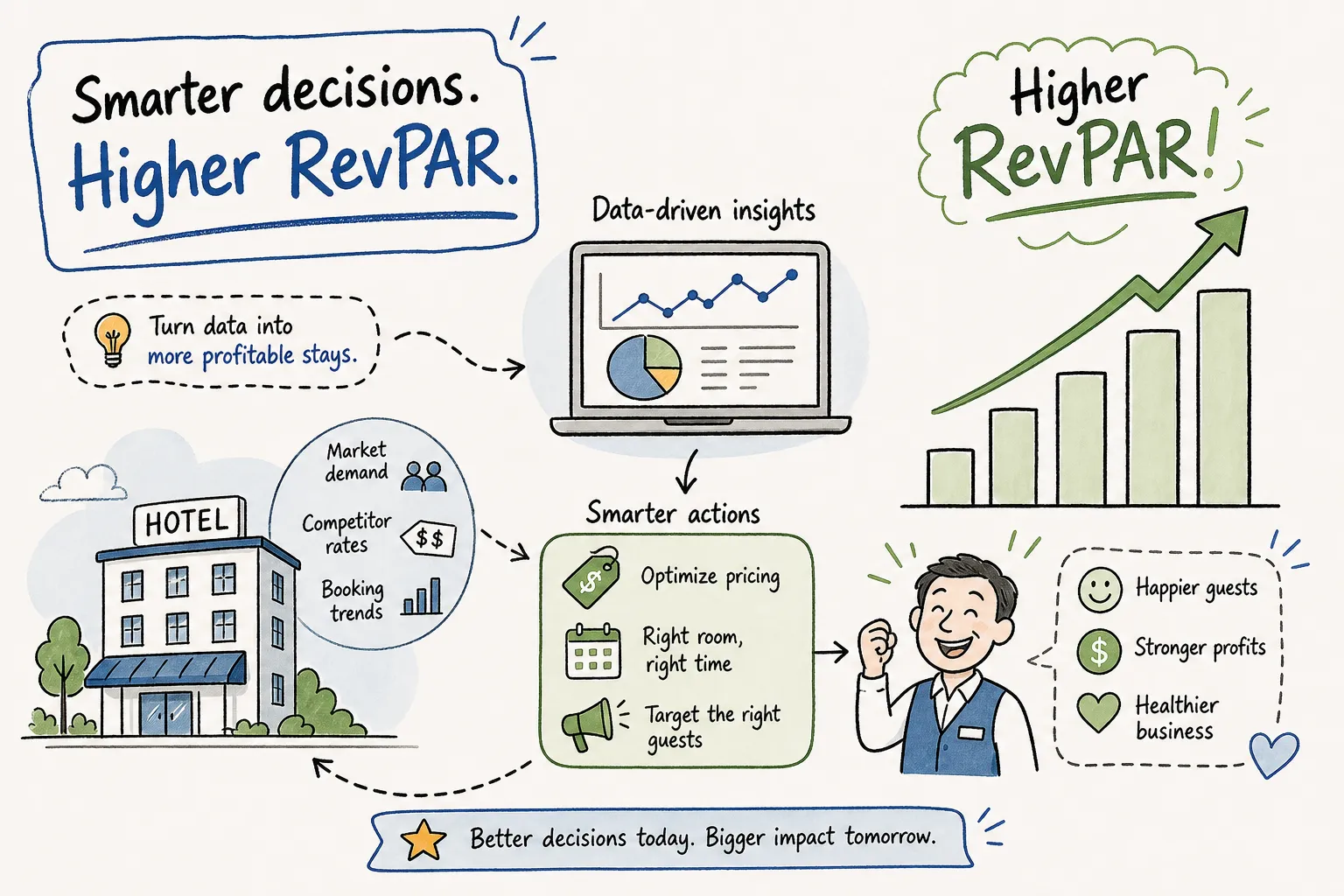
How Revenue Management Solutions Boost Hotel RevPAR: A Practical Guide for Indian Hotels
Revenue management solutions lift hotel RevPAR by replacing slow manual repricing with four connected functions: dynamic pricing, demand forecasting, competitor rate monitoring and direct booking optimisation.
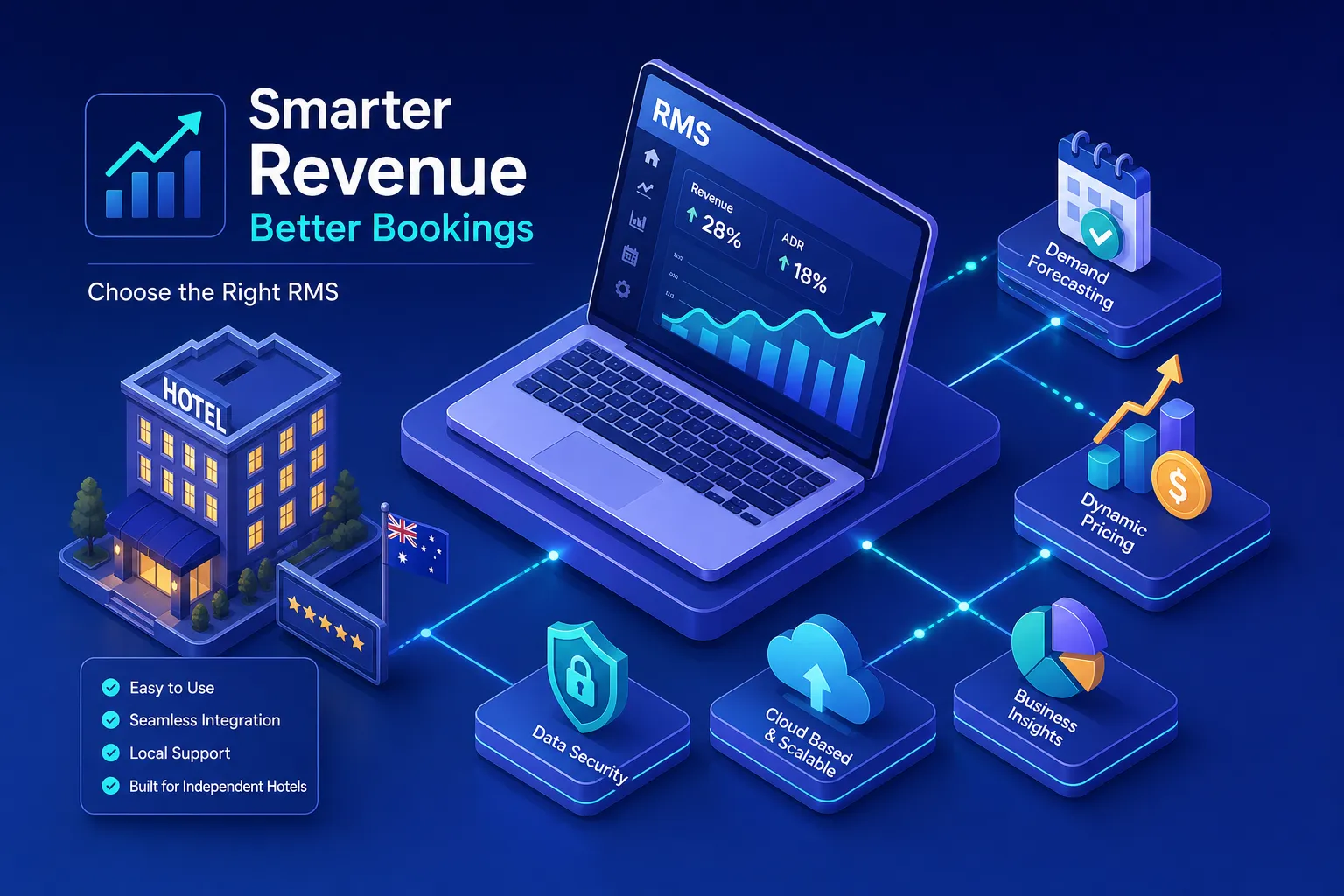
How to choose hotel revenue management software for independent properties in Australia
The best hotel revenue management software for independent Australian properties is not determined by the biggest marketing budget — it depends on your PMS stack, your inventory type and how your team wants to work.

Hotel Tech Stack for Revenue Optimization: Complete Guide
A hotel tech stack for revenue optimization has six core layers: PMS, RMS, channel manager, direct booking engine, CRM and loyalty, and accounting. How deeply they integrate matters more than which tools you pick.

Propeter vs Competitors: Which Hotel Revenue Management Solution Wins?
Propeter is a revenue management and pricing system for hospitality that works with your PMS, with a direct booking engine, guest CRM, loyalty and a Xero connection included at USD 5 per room per month.

Low Season Hotel Strategy: Maximize Occupancy & Revenue
Maximising hotel occupancy and revenue in low season is not about discounting your way to full rooms. It requires seven coordinated tact...

Best Practices for Integrating PMS and Revenue Management Systems
Integrating your Property Management System (PMS) with a Revenue Management System (RMS) means creating a live, two-way data connection ...

GOPPAR vs RevPAR: Why Profit-Per-Room Matters More Than Revenue
RevPAR (Revenue Per Available Room) measures how much room revenue your hotel generates per available room. GOPPAR (Gross Operating Prof...
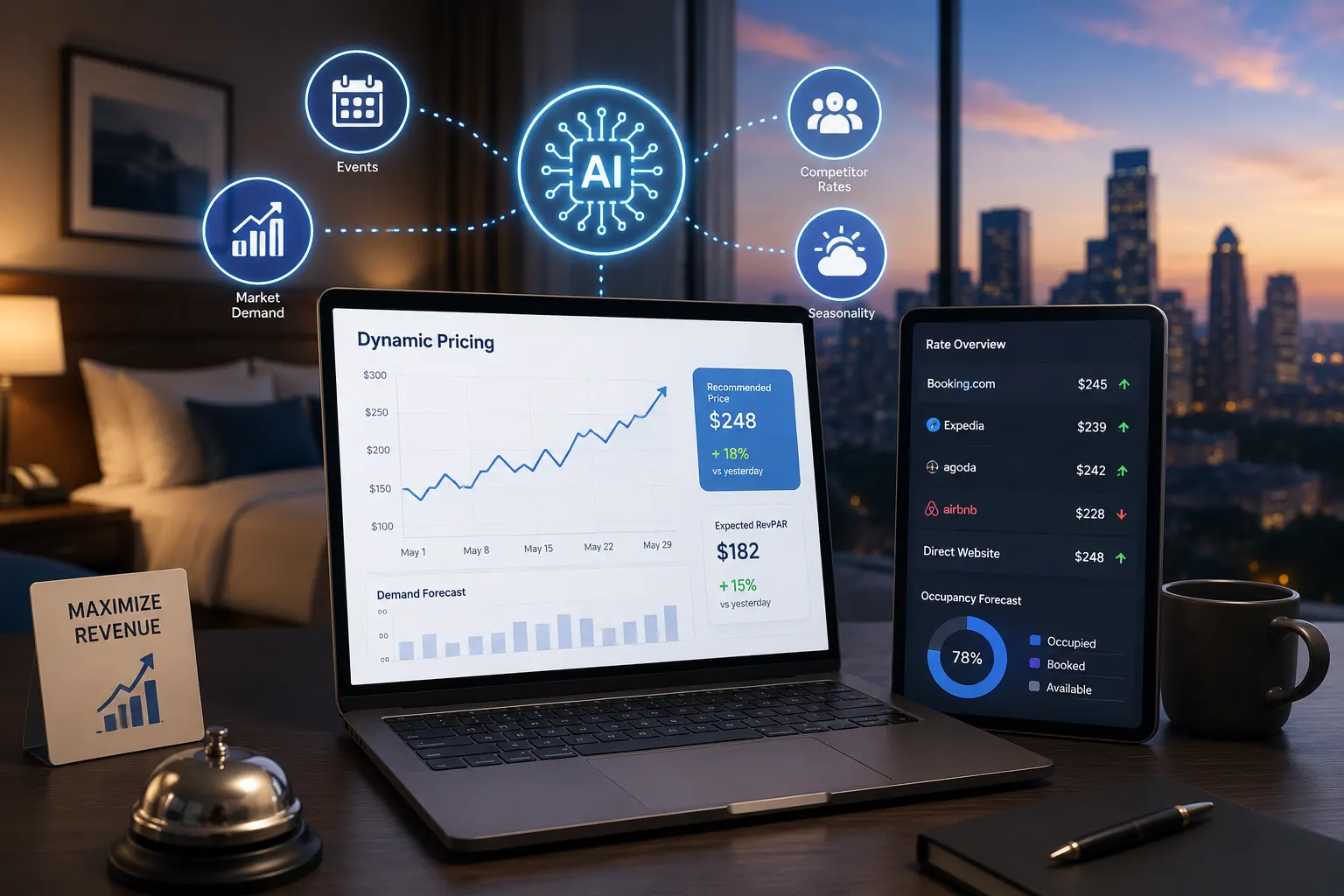
Why Dynamic Pricing Platforms Are a Game Changer for Hotels
A dynamic pricing platform is software that continuously analyses demand signals — competitor rates, booking pace, local events, histori...

InterContinental Hotel Loyalty Program: The Complete IHG One Rewards Guide
The InterContinental hotel loyalty program operates through two connected layers: IHG One Rewards, the free loyalty programme covering e...

What Is an RMS (Revenue Management System)? Complete Hotel Guide
An RMS (Revenue Management System) is software that recommends or sets the optimal room price for every date, room type and channel, using demand forecasting, competitor rates and booking pace.

Loyalty Program for Hotels: The Complete Guide for Independent Hotels
A loyalty program for hotels is a rewards system that encourages guests to return and book directly — through points, exclusive rates, t...
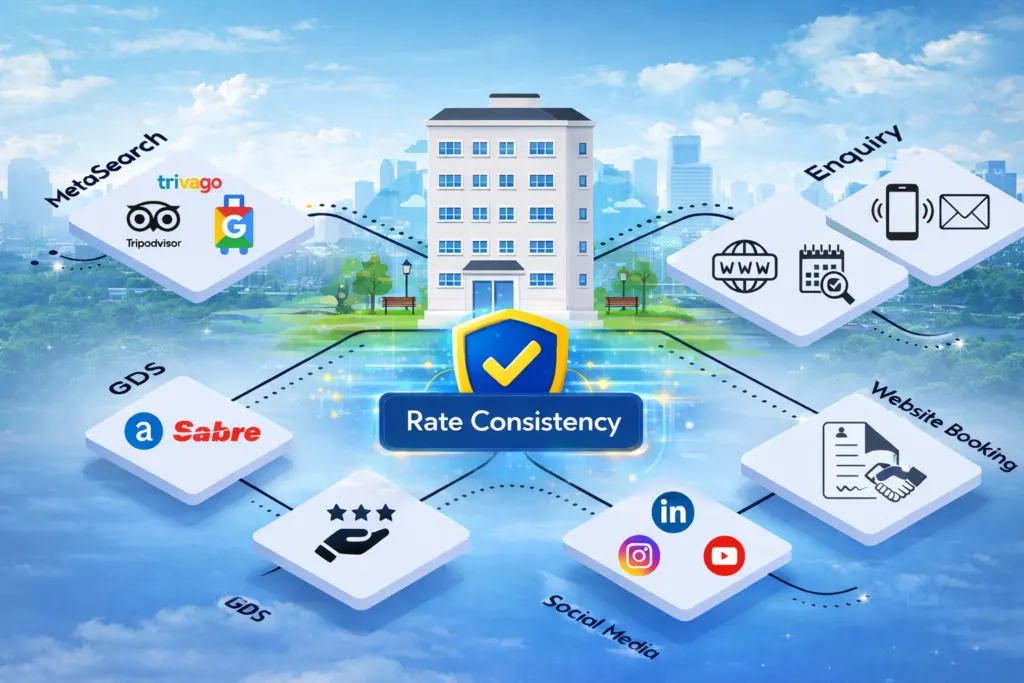
Pricing Parity Strategies for Hotels: Managing Rate Consistency Across Channels
A hotel pricing parity strategy is how a hotel manages the public rates and conditions it shows across OTAs, metasearch and its own website, within its contractual parity obligations, while still giving guests a reason to book direct.
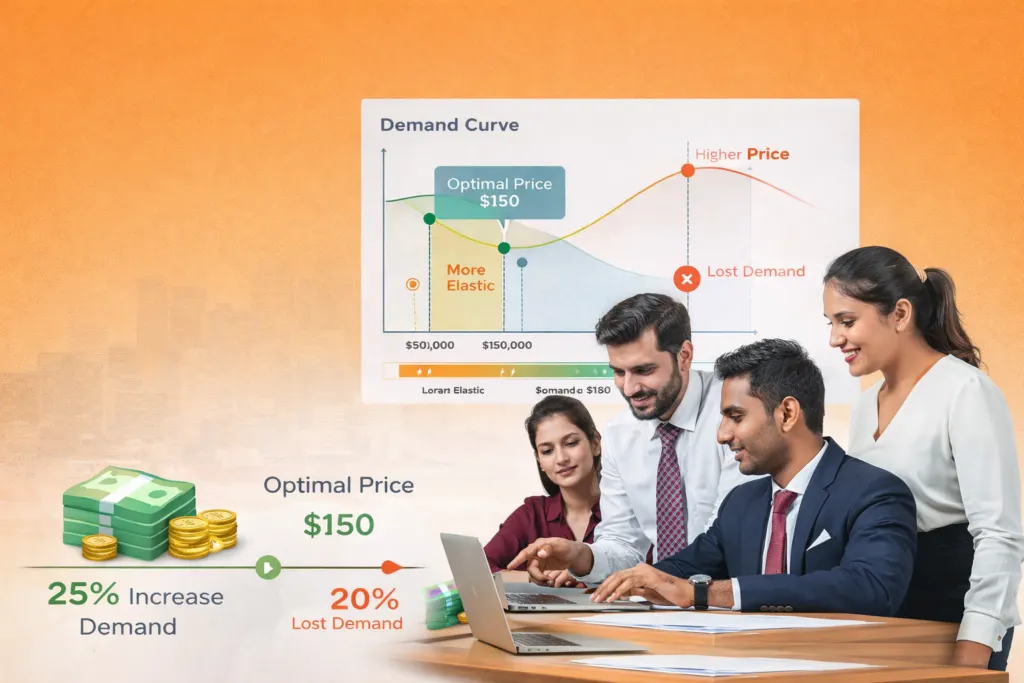
Price Elasticity Modeling for Hotels: Optimizing Pricing Without Losing Demand
Price elasticity modeling for hotels is a data-driven forecasting technique that quantifies how sensitive travelers are to changes in ro...

Psychological Pricing in Hospitality: How Smart Price Presentation Increases Hotel Revenue
Psychological pricing in hospitality is the practice of structuring and presenting room rates to influence a traveler’s subconscious per...
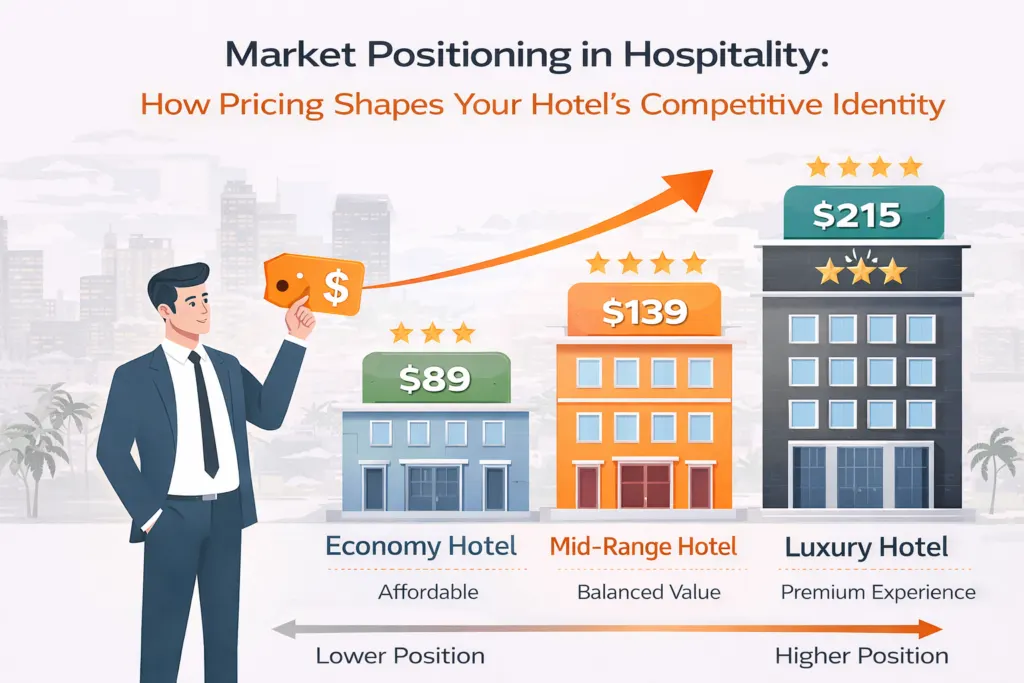
Market Positioning in Hospitality: How Pricing Shapes Your Hotel’s Competitive Identity
Market positioning in hospitality is the deliberate strategic process of establishing a hotel’s unique brand value and competitive ident...
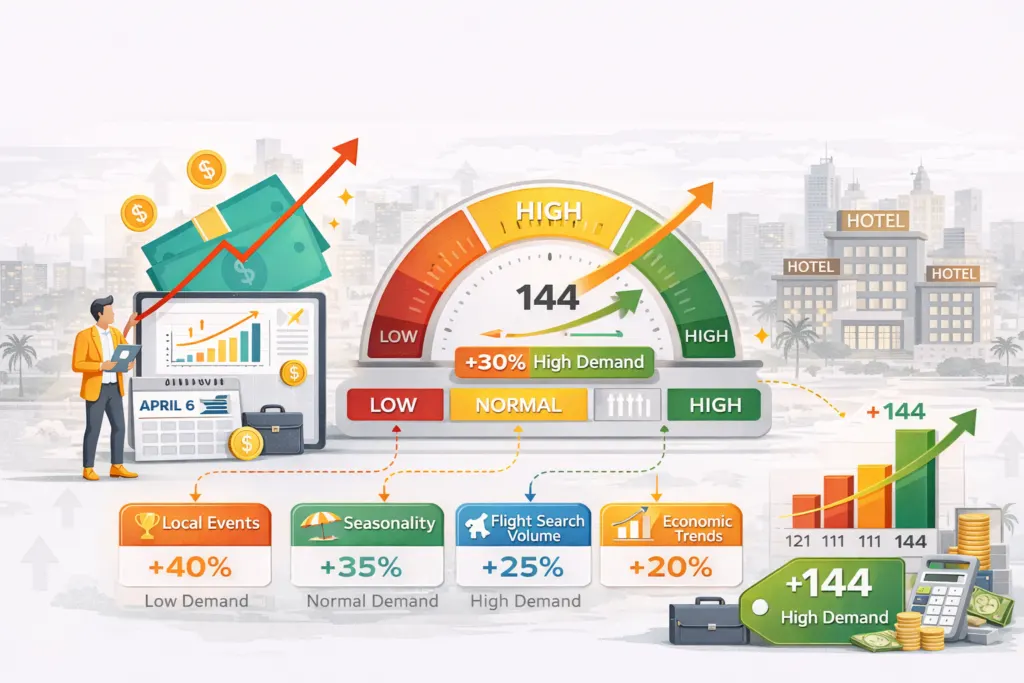
Market Demand Index in Hospitality: MPI and the Signals That Drive Hotel Demand
“Market demand index” is a loose term; the standard benchmark for a hotel’s share of market demand is the Market Penetration Index (MPI), read alongside ARI and RGI and forward demand signals.
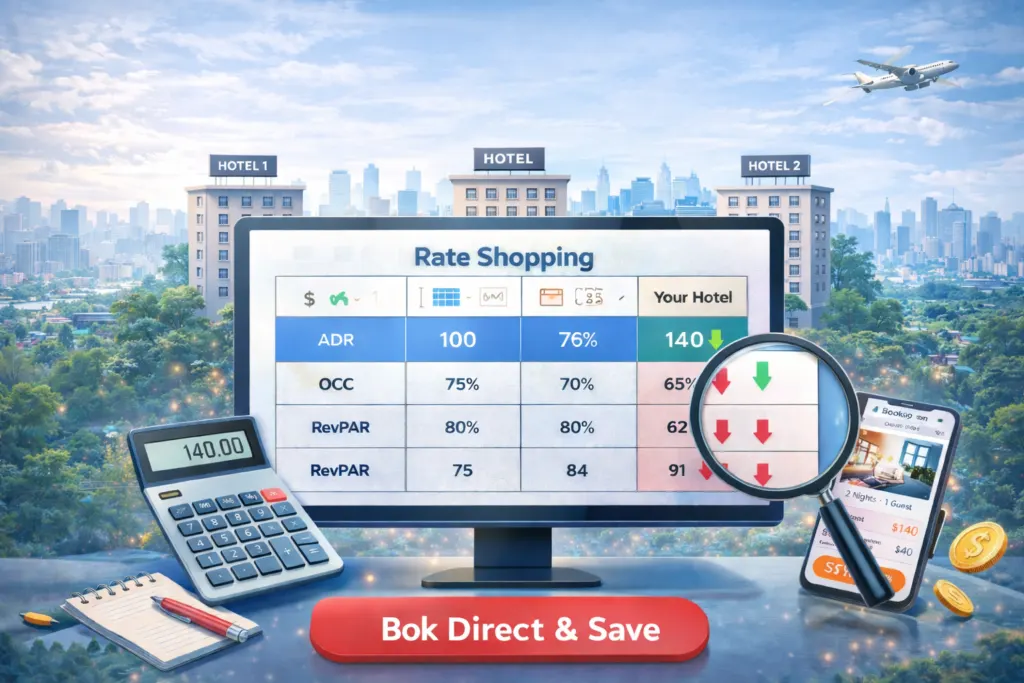
Rate Shopping Explained: How Hotels Monitor Competitor Pricing
Rate shopping in the hotel industry is the automated process of monitoring, aggregating, and analyzing competitor room rates and distrib...
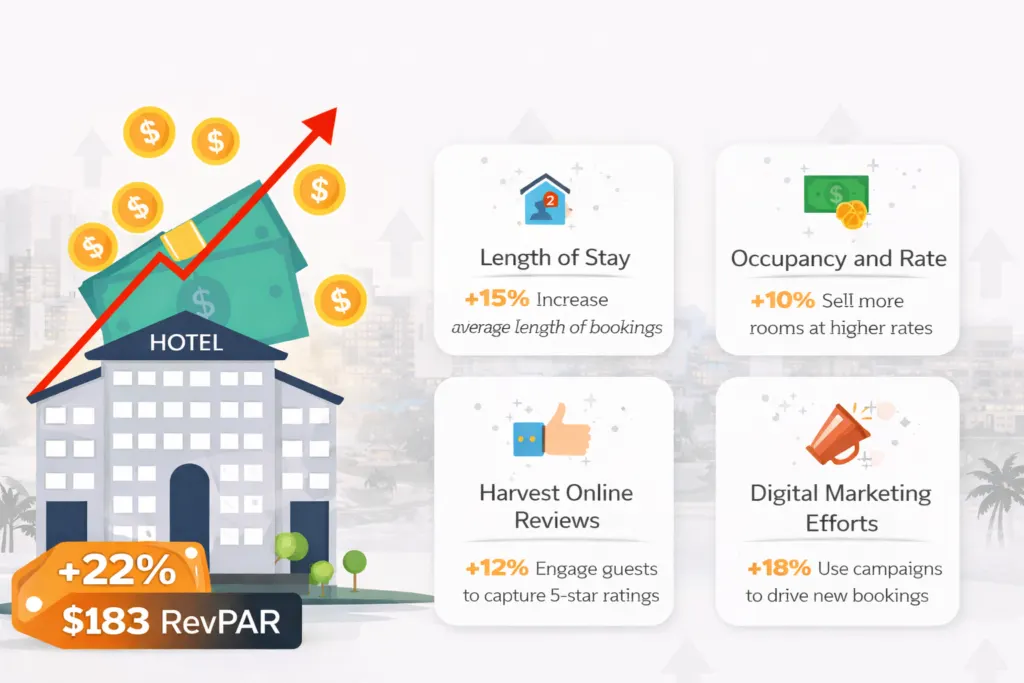
How to Increase RevPAR Without Lowering Rates
To increase RevPAR without lowering hotel room rates, hoteliers must focus on optimizing occupancy and Average Daily Rate (ADR) simultan...
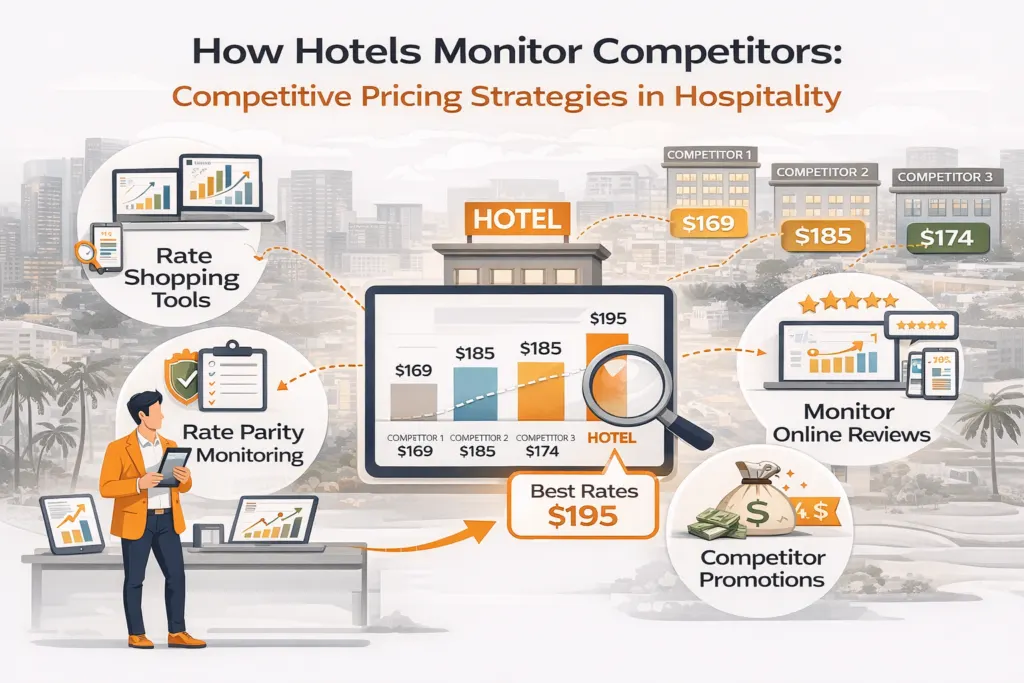
How Hotels Monitor Competitors: Competitive Pricing Strategies in Hospitality
Hotels monitor competitor pricing strategies by deploying automated rate shopper software that continuously extracts room rates, minimum...
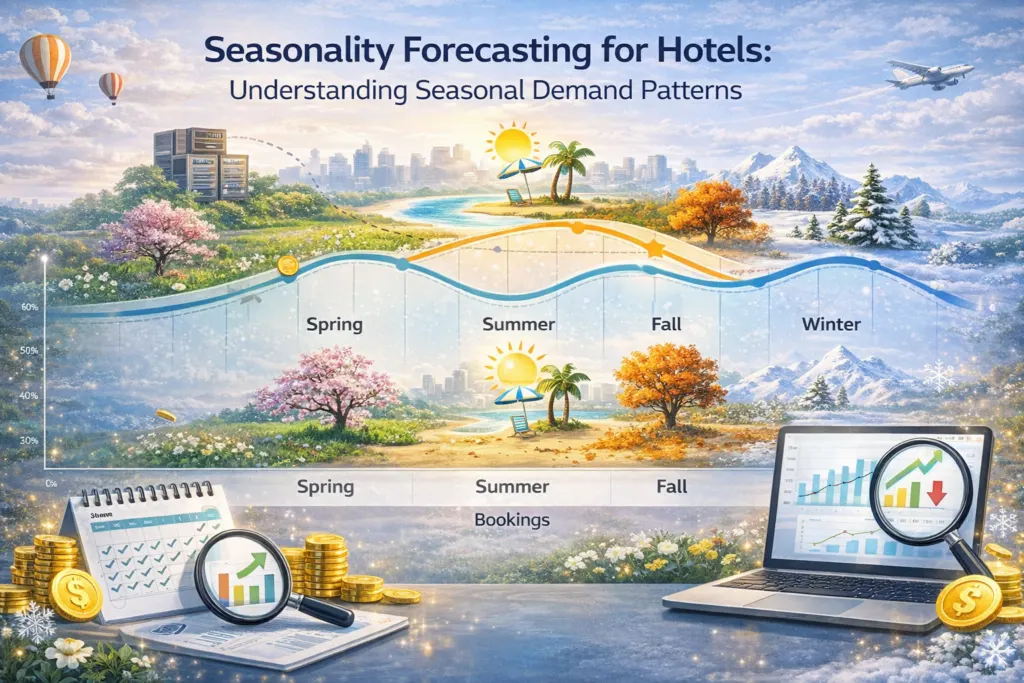
Seasonality Forecasting for Hotels: Understanding Seasonal Demand Patterns
Seasonality forecasting for hotels is a predictive revenue management practice that uses historical occupancy data, time-series analysis...
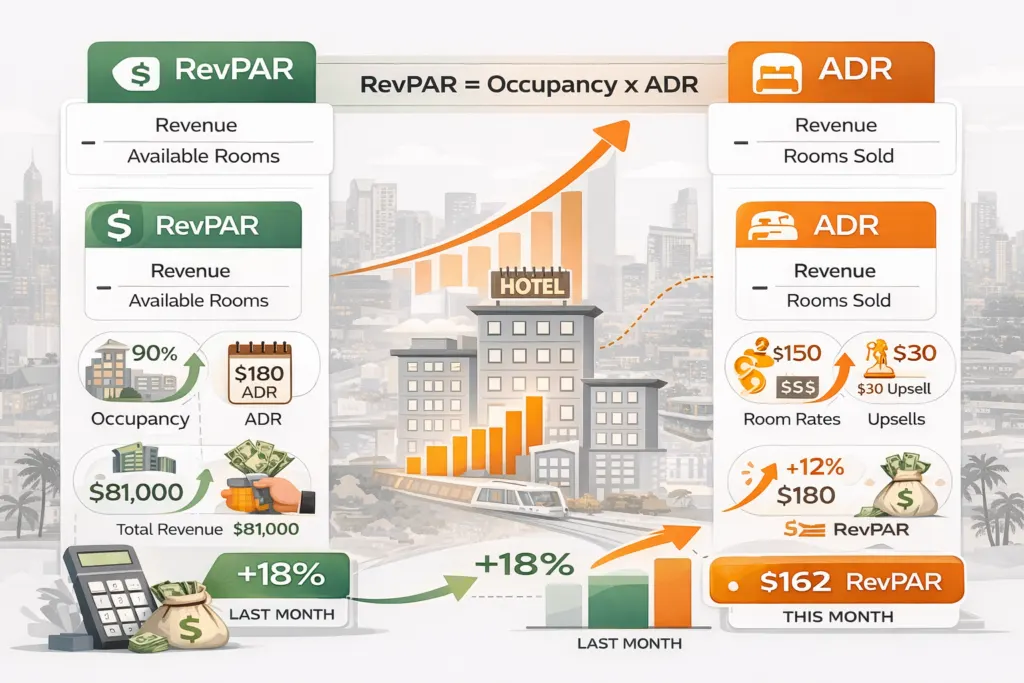
RevPAR vs ADR Explained: Understanding the Most Important Hotel Revenue Metrics
The core difference between RevPAR (Revenue Per Available Room) and ADR (Average Daily Rate) is that ADR measures the average price paid...
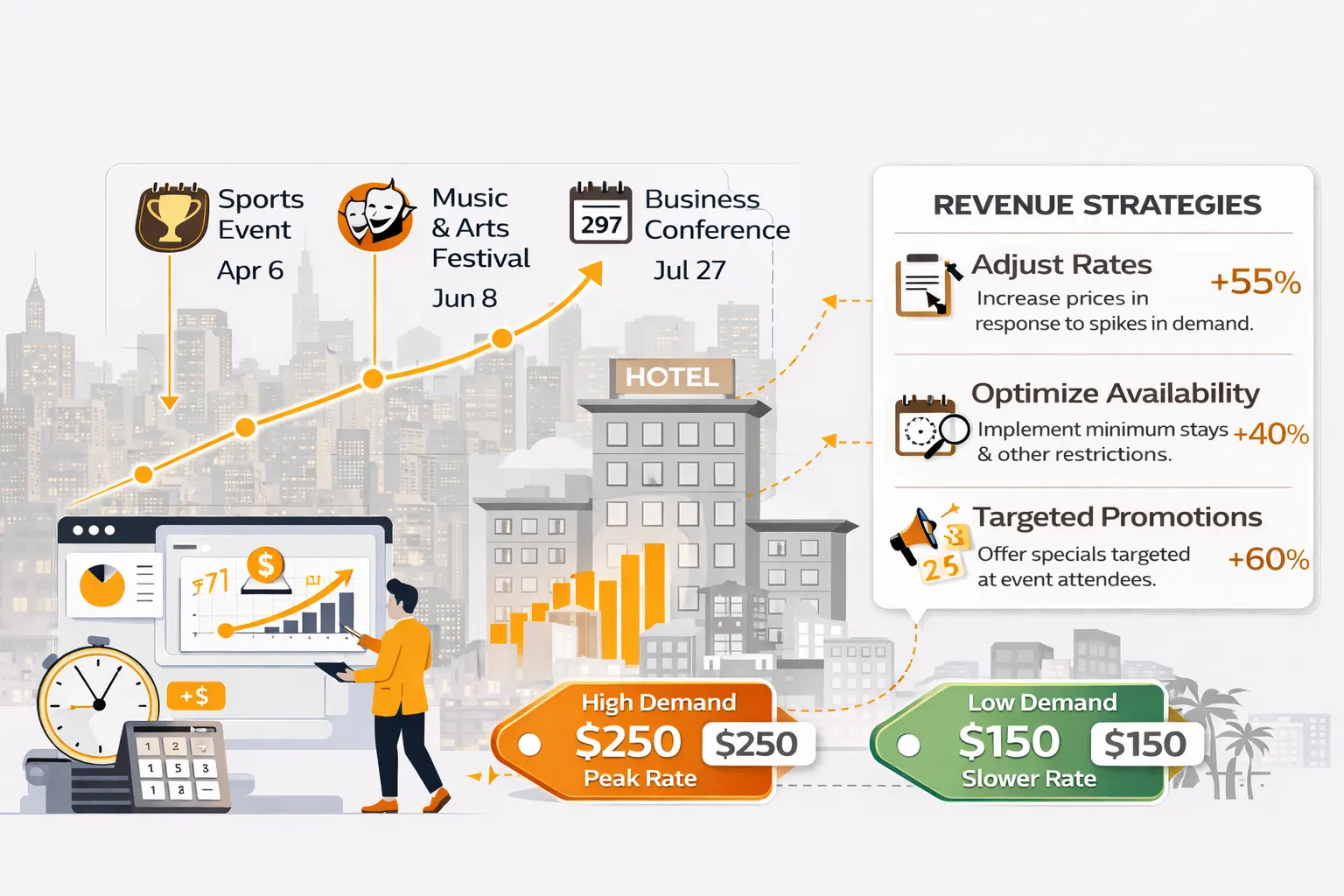
How Events Impact Hotel Pricing: Revenue Strategies for High-Demand Periods
Local events create localized room scarcity, shifting the market’s price elasticity and allowing hotels to execute aggressive demand-bas...

Strategies to Improve Hotel Occupancy: Proven Techniques to Fill More Rooms
To improve hotel occupancy without lowering public room rates, hoteliers must execute targeted distribution and segmentation strategies ...

How AI Is Transforming Hotel Revenue Management
AI is changing hotel revenue management by moving the work from backward-looking spreadsheet analysis to forward-looking forecasting that is refreshed many times a day. Machine-learning models weigh booking pace, competitor rates, local events and seasonality together, forecast demand for each room type and date, and recommend a rate with the reasons behind it — and a person reviews and approves it before it is published.
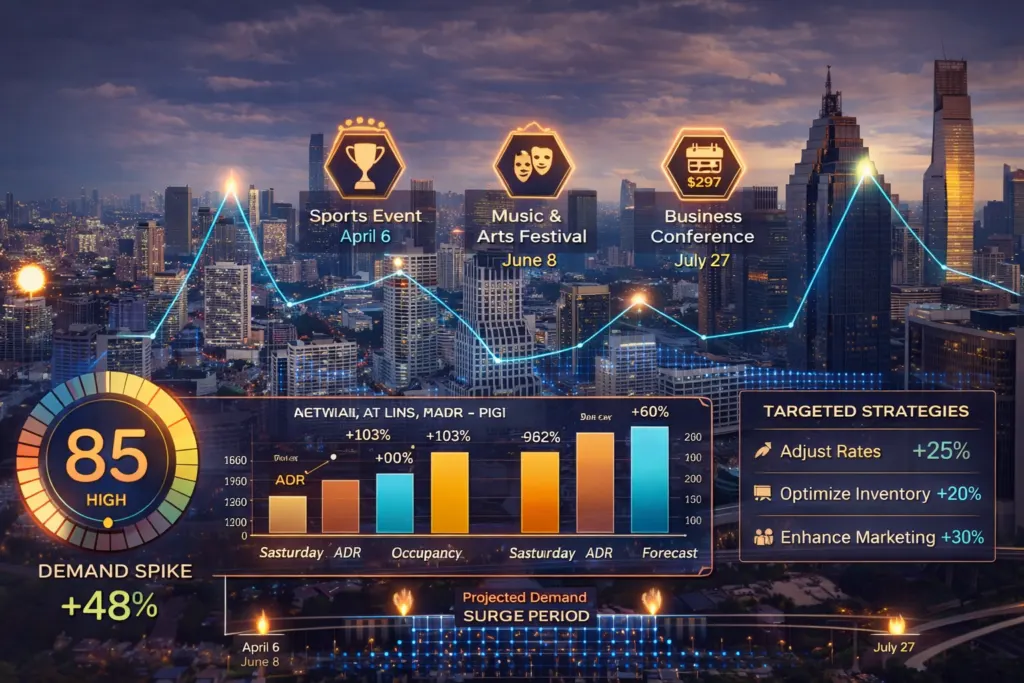
Event Demand Forecasting for Hotels: Predicting Demand from Major Events
Event demand forecasting for hotels is the process of tracking local events (concerts, sports, conferences) and the demand signals around them so that room rates and restrictions are adjusted before booking pace spikes. Modern systems combine event calendars with booking-pace anomalies and compset closures to lift rates weeks ahead of the market.
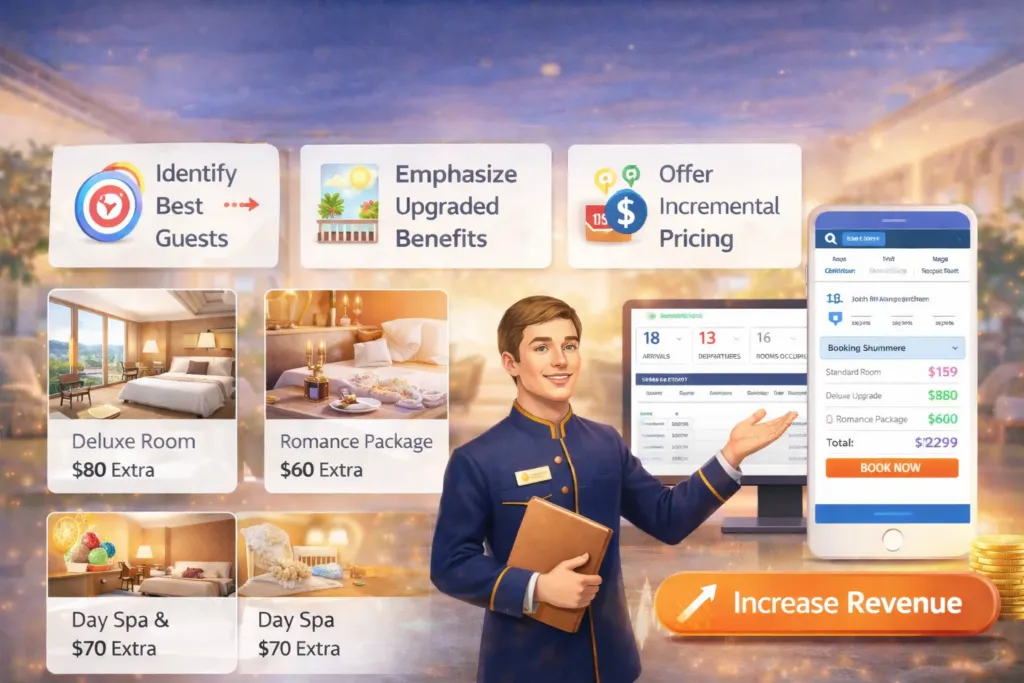
Upselling Strategies for Hotels: How to Increase Revenue from Every Booking
Hotel upselling is a data-driven revenue management strategy that maximizes the financial value of existing reservations by encouraging ...
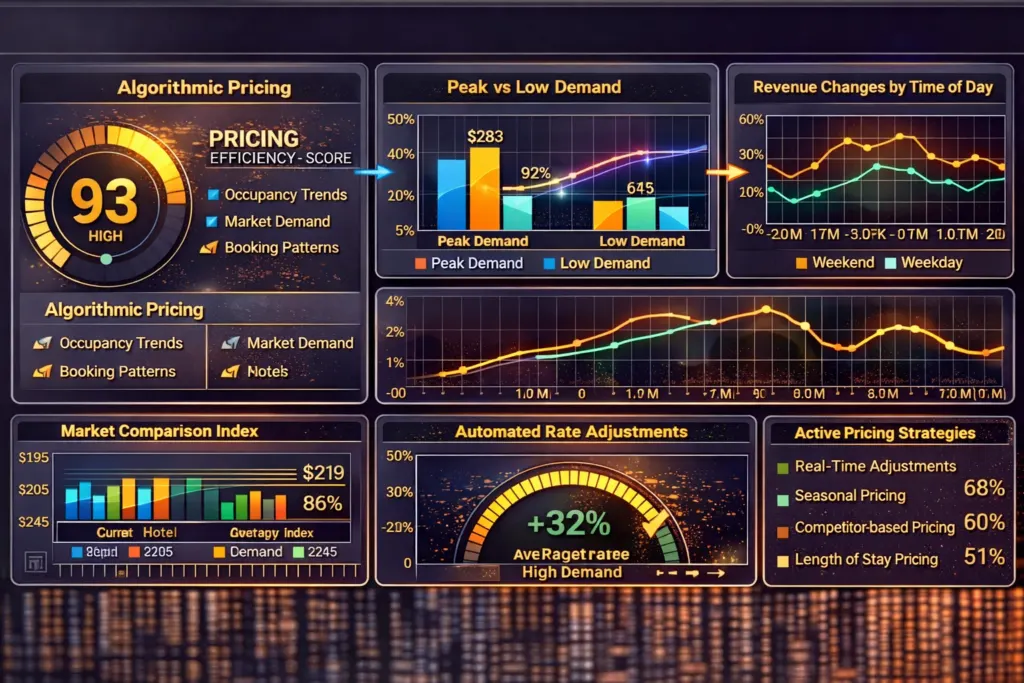
Dynamic Pricing Strategies Used by Top Hotels
Dynamic pricing strategies used by top hotels adjust room rates for each date and room type as demand, competitor pricing and on-the-books occupancy change, instead of relying on static seasonal rate sheets. Modern revenue management systems recommend rates several times a day; the revenue team sets the guardrails, reviews the recommendations and approves the changes.

Competitive Set Strategy for Hotels: Building the Right Compset for Smarter Pricing
To build a competitive set that drives smarter pricing decisions, hotels must abandon static, property-centric models and implement a dy...

When Hotels Should Increase Prices: Key Signals Every Revenue Manager Should Watch
Hotels should increase prices when leading indicators show demand running ahead of supply for a date: booking pace ahead of the same lead time last year, compset hotels closing out or raising rates, a confirmed event, on-the-books occupancy crossing a pre-set threshold, low cancellations against strong pace, or destination search volume rising above seasonal norms.
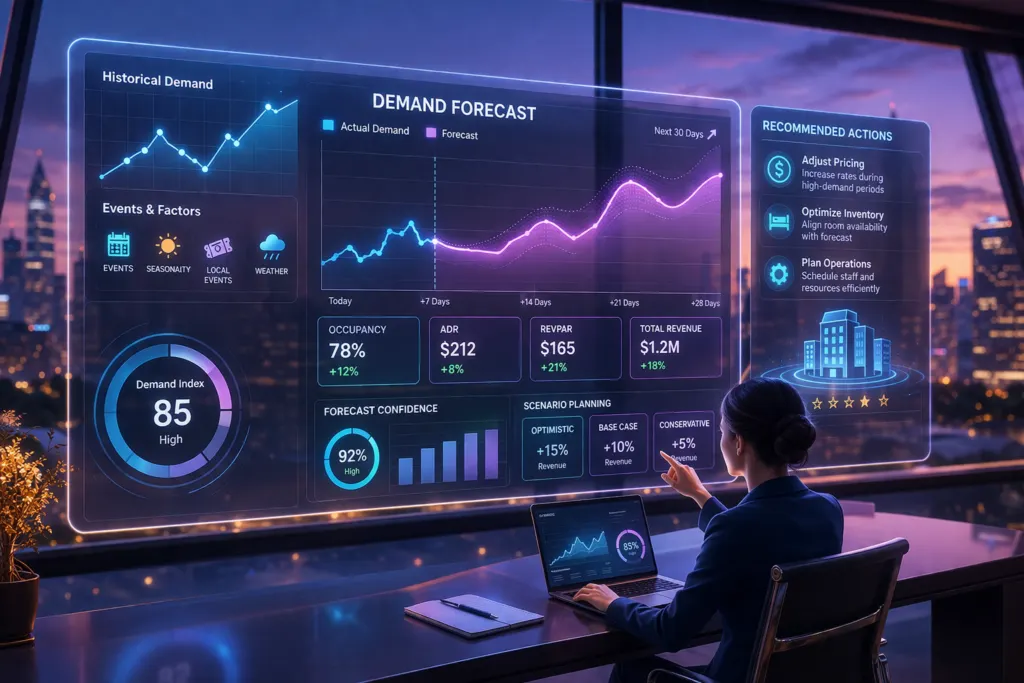
Demand Forecasting Techniques for Hotels: Predicting Demand to Optimize Revenue
Hotels forecast demand with a combination of historical, quantitative and machine-learning techniques: unconstrained demand modelling, pick-up analysis against historical booking curves, causal regression with external signals, and machine-learning models such as gradient boosting and LSTM networks that weigh many signals at once.
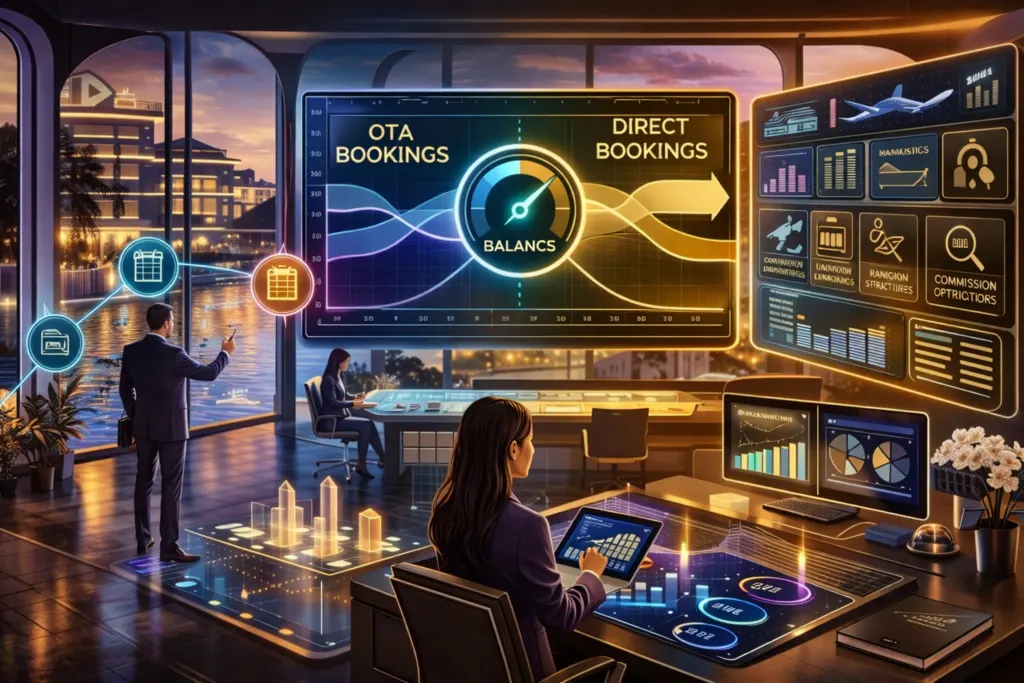
Channel Mix Optimization: Balancing OTA and Direct Bookings for Maximum Hotel Revenue
Hotels optimize their channel mix by prioritizing net revenue yield over gross booking volume using Net RevPAR tracking. While Online Tr...
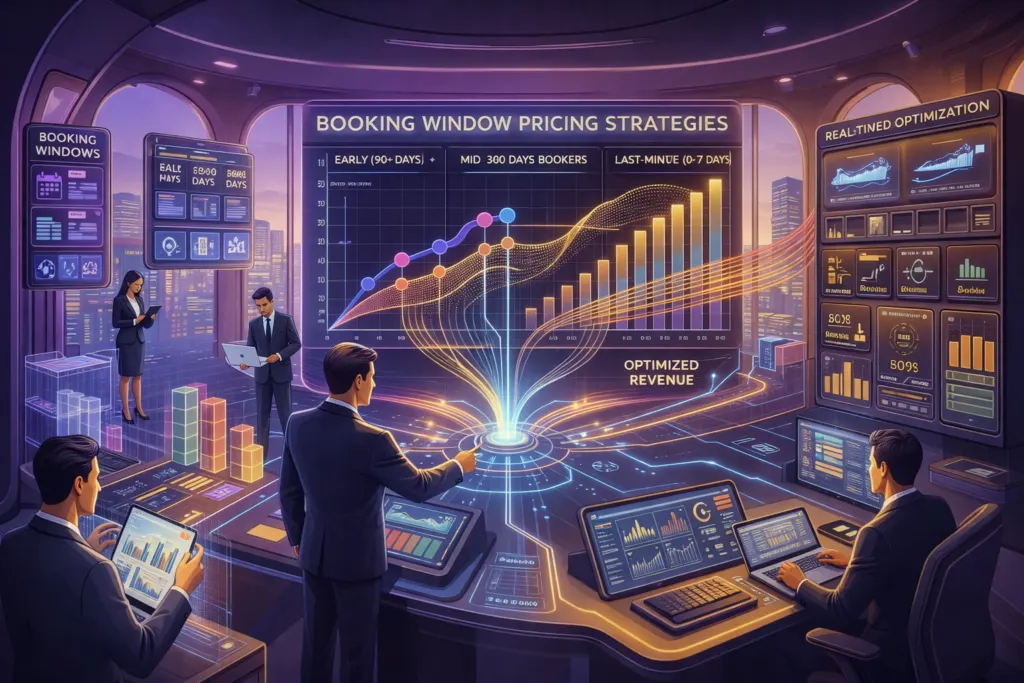
Booking Window Pricing Strategies: How Hotels Optimize Rates Across the Booking Cycle
Hotels optimize booking window pricing by dynamically balancing discount-driven volume with high-yield premium demand across the guest a...
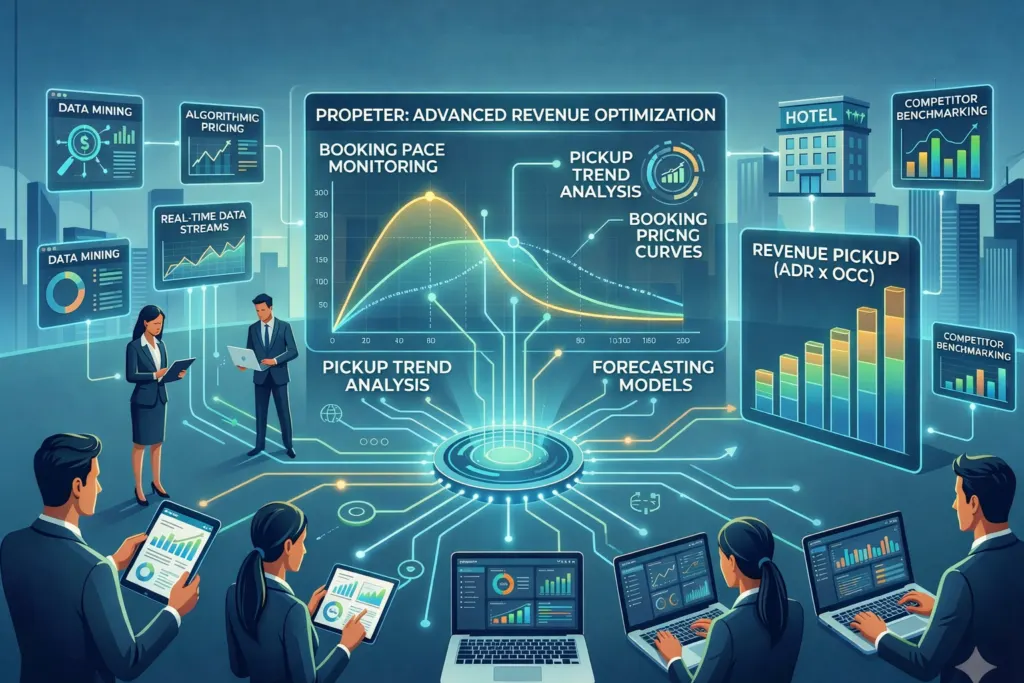
Booking Pace Analysis for Hotels: Understanding Pickup Trends to Optimize Pricing
Hotels optimize pricing by tracking the pickup rate—the velocity at which new room bookings accumulate for a specific future date—relati...

AI vs Traditional Revenue Management: How Hotel Pricing Is Evolving
AI revenue management differs from traditional hotel revenue management in three ways: speed, data volume and consistency. Here is how the two compare, and how to make the transition safely.

AI Revenue Copilots: How AI Assistants Are Transforming Hotel Revenue Management
An AI revenue copilot is a hotel pricing assistant that continuously monitors demand signals, competitor rates and booking pace, and generates rate recommendations — with the reasoning behind them — for a person to review before anything is published. Propeter follows this approval-first model.

AI Forecasting for Hotel Demand: How Predictive Analytics Improves Revenue Strategy
AI forecasting for hotel demand uses machine-learning models — typically gradient boosting (such as XGBoost) and LSTM neural networks — to predict future occupancy and booking pace from many signals at once, refreshed frequently as new bookings arrive. The forecast is the input to pricing; the resulting rate recommendations are reviewed before they are published.
See how Propeter would price your hotel
A revenue management and pricing system for hotels: explainable rate recommendations you approve, working with your existing PMS. USD 5 per room per month, all modules included.