One of the most important decisions in hotel revenue management is determining when to increase room prices.
Raising prices too early can reduce bookings, while raising them too late can result in lost revenue opportunities. Successful hotels rely on data-driven signals such as demand forecasts, booking pace, competitor pricing, and market events to determine the optimal moment to increase rates.
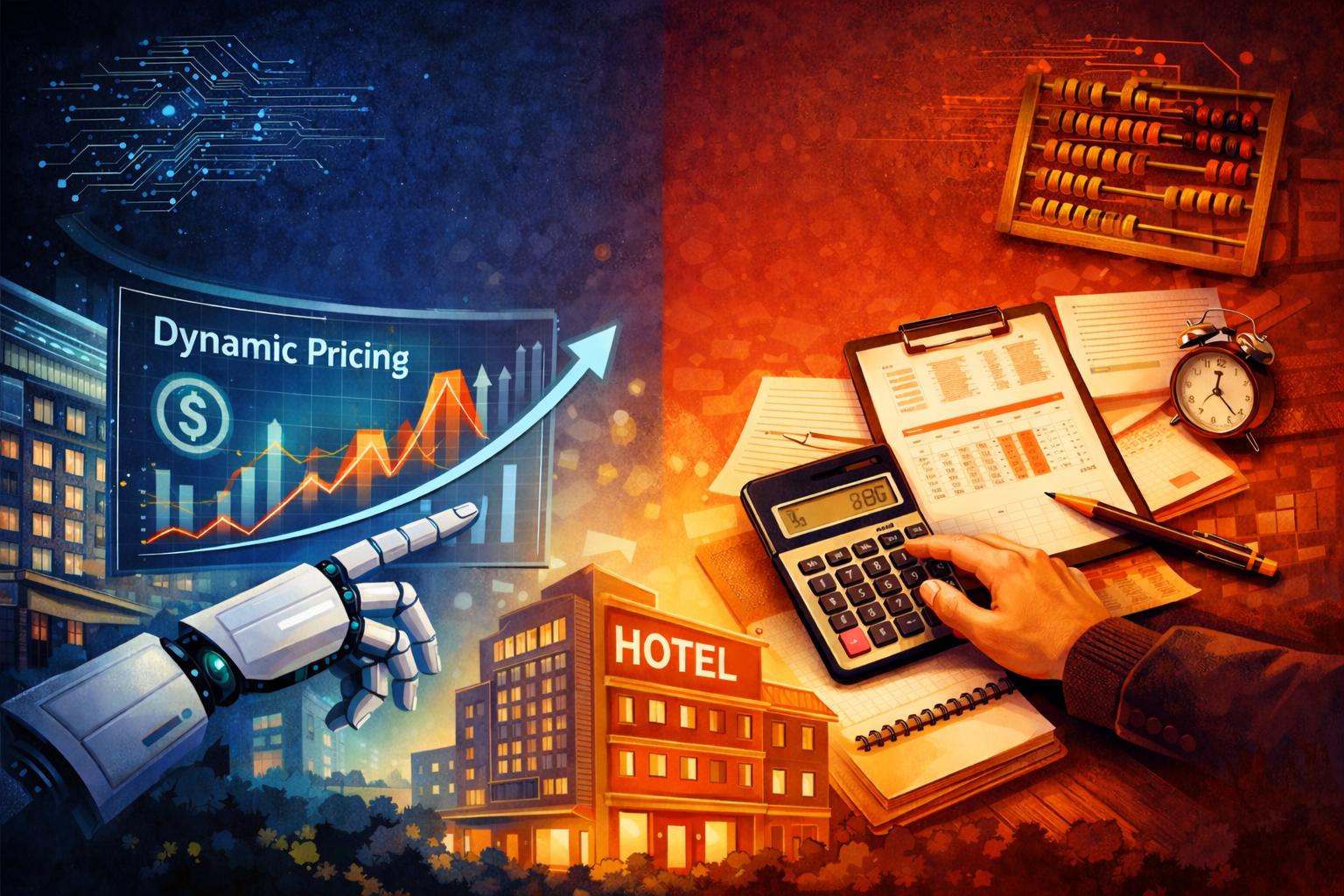
Modern revenue management systems analyze these signals automatically, allowing hotels to adjust prices dynamically and capture higher revenue during strong demand periods.
If you’re exploring how pricing models work in hospitality, you can read the full Dynamic Pricing for Hotels guide.
Demand Spike Signals
Demand spikes occur when booking activity suddenly increases due to changes in travel demand. Recognizing these spikes early allows hotels to raise prices before the market becomes fully saturated.
Common demand spike indicators include:
sudden increases in booking velocity
rising search demand for a destination
increased OTA visibility and bookings
seasonal travel surges
last-minute demand increases.
Revenue management systems monitor these signals continuously. When demand begins to accelerate, pricing engines automatically recommend higher room rates to maximize revenue.
Demand forecasting tools help identify these patterns early. Learn more about this in the Demand Forecasting Guide.
Occupancy Thresholds
Occupancy levels are one of the most reliable indicators for when hotels should raise prices.
Most revenue strategies use occupancy thresholds to trigger price increases.
Example threshold strategy:
Below 40% occupancy → stimulate demand with competitive pricing
40–70% occupancy → maintain market rates
70–90% occupancy → gradually increase prices
Above 90% occupancy → premium pricing.
As inventory becomes limited, remaining rooms become more valuable. Raising prices during high occupancy periods allows hotels to capture higher willingness to pay.
This approach is a core principle of modern hotel pricing strategy.
Competitor Price Movements
Competitor pricing is another key signal for when hotels should increase their rates.
Guests typically compare multiple hotels before booking. If competitors begin raising prices due to rising demand, this often signals that the market is strengthening.
Revenue managers commonly monitor:
competitor minimum rate
competitor average rate
competitor maximum rate.
If a hotel’s price remains significantly lower than competitors during strong demand periods, it may be missing a revenue opportunity.
Revenue management platforms incorporate competitor pricing intelligence to ensure hotels remain competitively positioned while maximizing revenue.
Booking Pace Signals
Booking pace refers to how quickly rooms are being booked compared to historical trends.
When bookings arrive faster than expected, it often indicates stronger-than-normal demand.
Common booking pace indicators include:
higher pickup compared to historical averages
faster bookings for specific dates
shorter booking windows
increased direct booking activity.
When booking pace accelerates, hotels should consider increasing prices to capture higher demand.
Booking pace analysis is a key input for automated pricing systems that adjust room rates in real time.
Event-Driven Demand
Local events can significantly impact hotel demand.
Major events often create sudden demand spikes that justify higher room rates.
Examples of events that influence hotel pricing include:
conferences and trade shows
major sporting events
concerts and festivals
holidays and seasonal travel peaks.
Hotels located near event venues or convention centers may experience rapid demand increases during these periods.
Revenue managers often increase prices significantly during event-driven demand to reflect higher market willingness to pay.
Demand forecasting systems help identify these opportunities earlier, allowing hotels to adjust pricing strategies proactively.
How Intelligent Pricing Systems Detect These Signals
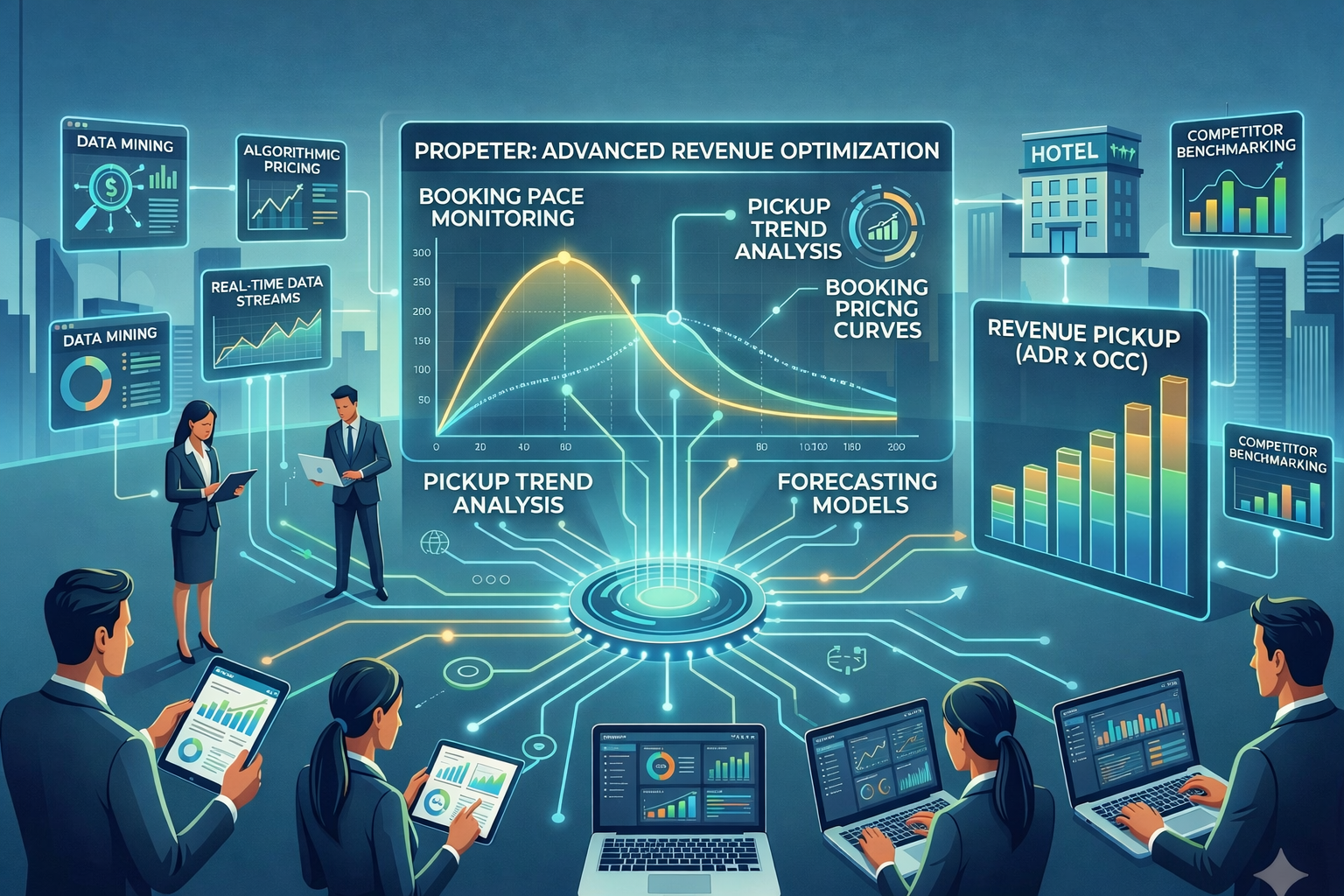
Modern revenue management systems analyze multiple demand indicators simultaneously.
These platforms evaluate:
occupancy trends
competitor pricing
booking pace
demand forecasts
market events.
By combining these signals, pricing engines can recommend the optimal time to increase room rates while minimizing the risk of lost bookings.
For a deeper explanation of dynamic pricing strategies, visit the Dynamic Pricing Pillar.
Conclusion
Knowing when to increase hotel room prices is a critical part of effective revenue management.
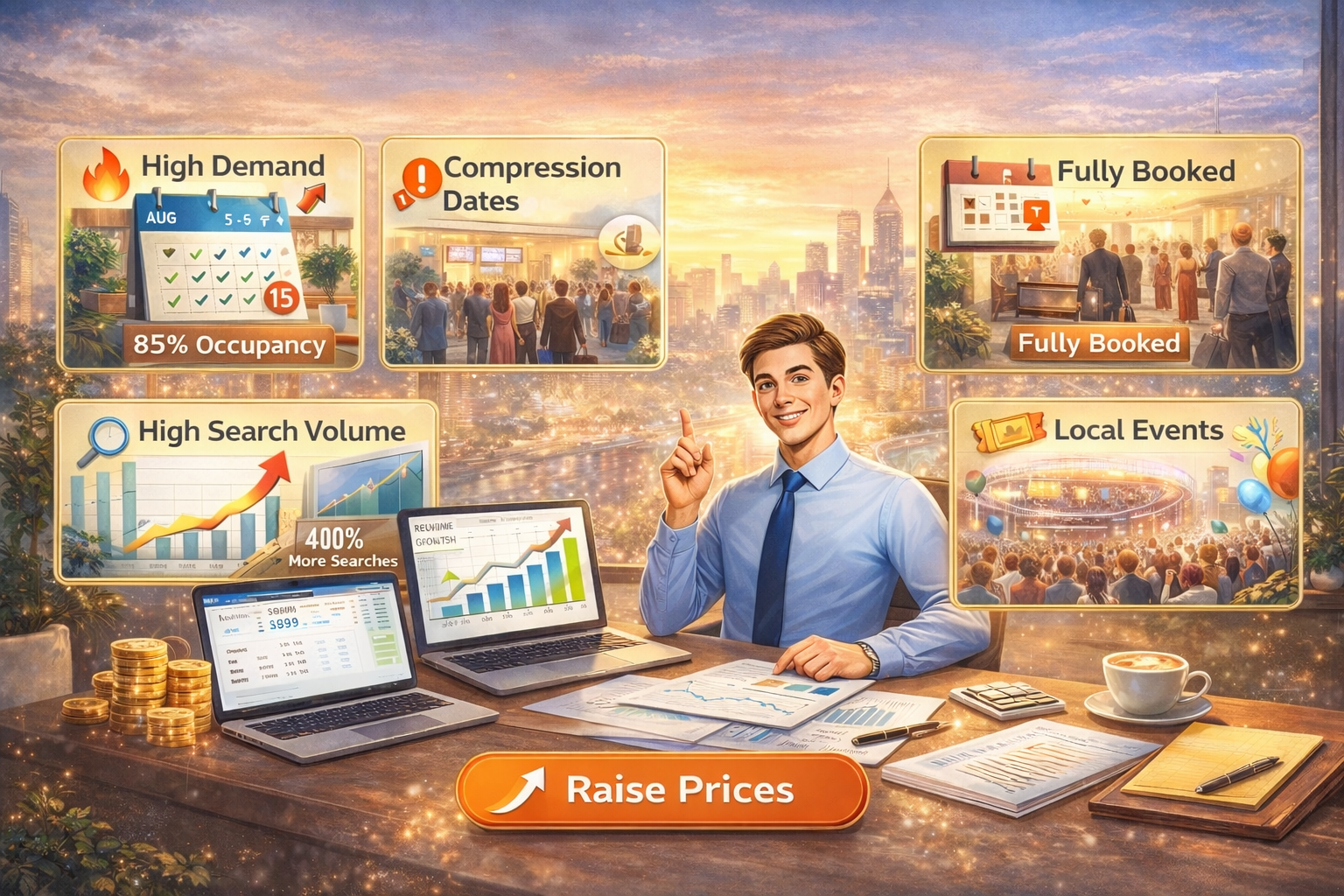
Successful hotels rely on multiple signals to guide pricing decisions, including:
demand spikes
occupancy thresholds
competitor pricing movements
booking pace trends
event-driven demand.
Hotels that monitor these signals and adjust prices dynamically can maximize revenue while maintaining competitive positioning.
Automated pricing systems make this process faster and more accurate by continuously analyzing market conditions and recommending optimal rates.
Ready to Optimize Your Hotel Pricing Strategy?
Discover how Propeter’s intelligent pricing engine helps hotels detect demand signals and automatically adjust room rates for maximum revenue.