Major events can significantly influence hotel demand within a destination. Conferences, sporting tournaments, concerts, and festivals often create sudden increases in traveler arrivals, which directly impacts hotel occupancy and pricing strategies.
Hotels that accurately forecast event-driven demand can adjust pricing earlier, allocate inventory strategically, and maximize revenue during high-demand periods.
Event demand forecasting combines historical analysis, event calendar monitoring, and demand modeling to predict how large events will impact hotel bookings.
Understanding event-driven demand is an important component of modern revenue management and works closely with broader demand forecasting strategies.
For a deeper explanation of forecasting methods, explore our Hotel Demand Forecasting Guide.
Event Demand Spikes
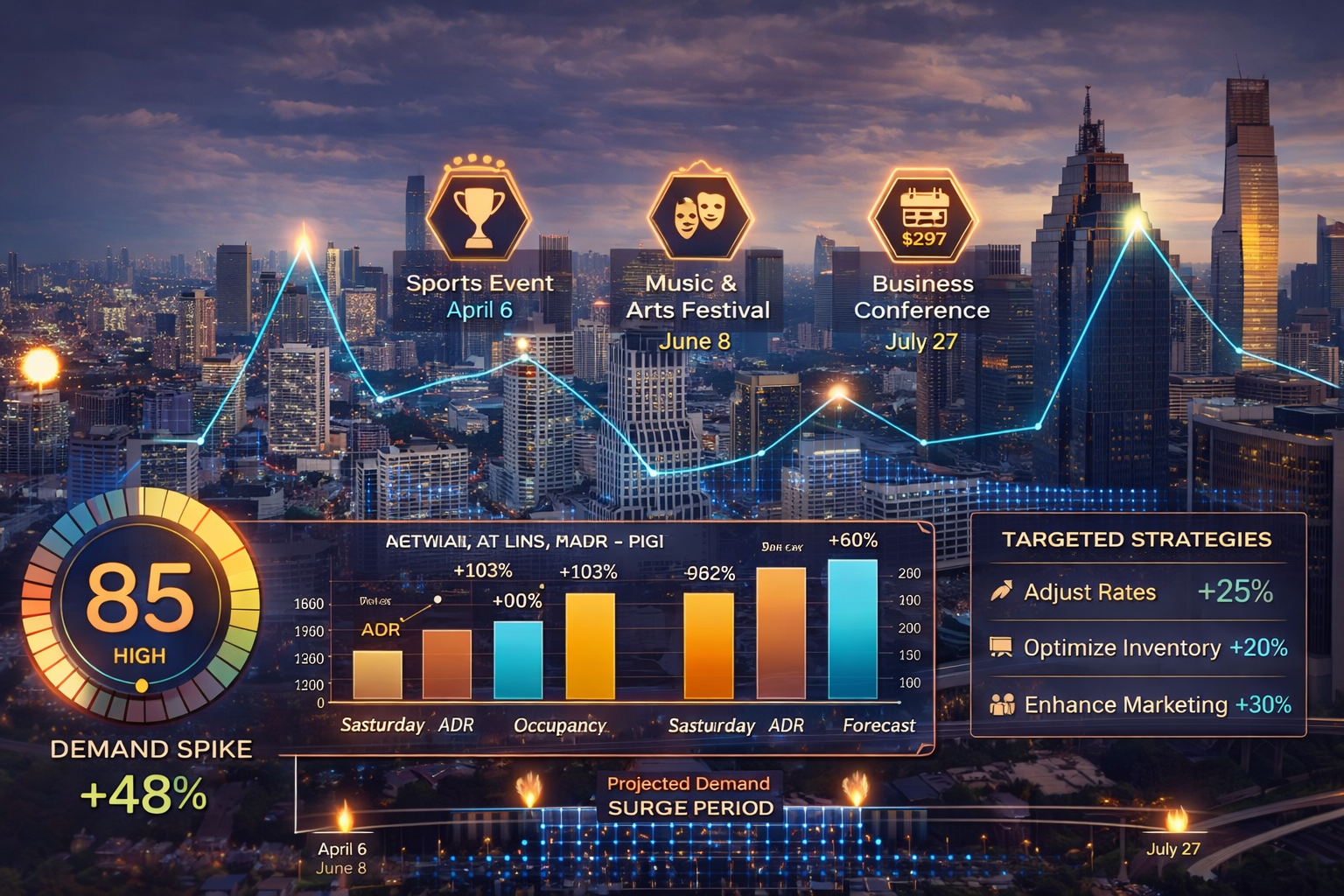
Events often cause rapid spikes in travel demand for specific dates. When a city hosts a large event, hotel bookings may increase dramatically as attendees search for accommodation near the venue.
Examples of events that typically generate demand spikes include:
international conferences and conventions
music festivals and cultural events
trade exhibitions
major concerts and entertainment events.
These events attract travelers from outside the local market, creating a sudden increase in accommodation demand.
Revenue managers often detect early demand signals such as:
increased booking pace for event dates
higher search activity on booking platforms
rising competitor room rates
reduced availability across nearby hotels.
By identifying these signals early, hotels can raise prices before demand peaks and maximize revenue during event periods.
Conference Demand
Large conferences and corporate conventions are among the most predictable sources of event-driven demand for hotels.
Convention centers and major meeting venues often host large gatherings that attract thousands of attendees.
Conference demand typically produces several revenue opportunities for nearby hotels:
strong weekday occupancy
higher group bookings
longer average length of stay.
Hotels often work closely with conference organizers and corporate partners to secure room blocks for attendees.
Revenue managers monitor conference calendars to anticipate demand increases and adjust pricing strategies accordingly.
Early forecasting of conference demand allows hotels to increase prices gradually as event dates approach.
Sporting Events
Major sporting events can create some of the most intense demand spikes in the hospitality industry.
Events such as championships, tournaments, and international competitions attract large numbers of spectators, athletes, and media personnel.
Examples include:
international football tournaments
cricket championships
motorsport events
marathon races.
During major sporting events, hotels located near stadiums or transportation hubs often experience extremely high occupancy levels.
These events can also create compression nights, when nearly all hotels in the area are fully booked.
Revenue managers often increase prices significantly during these periods because travelers have fewer accommodation alternatives.
How Hotels Forecast Event Demand
Successful event demand forecasting relies on analyzing multiple data sources.
Revenue managers typically monitor:
city event calendars
historical event booking patterns
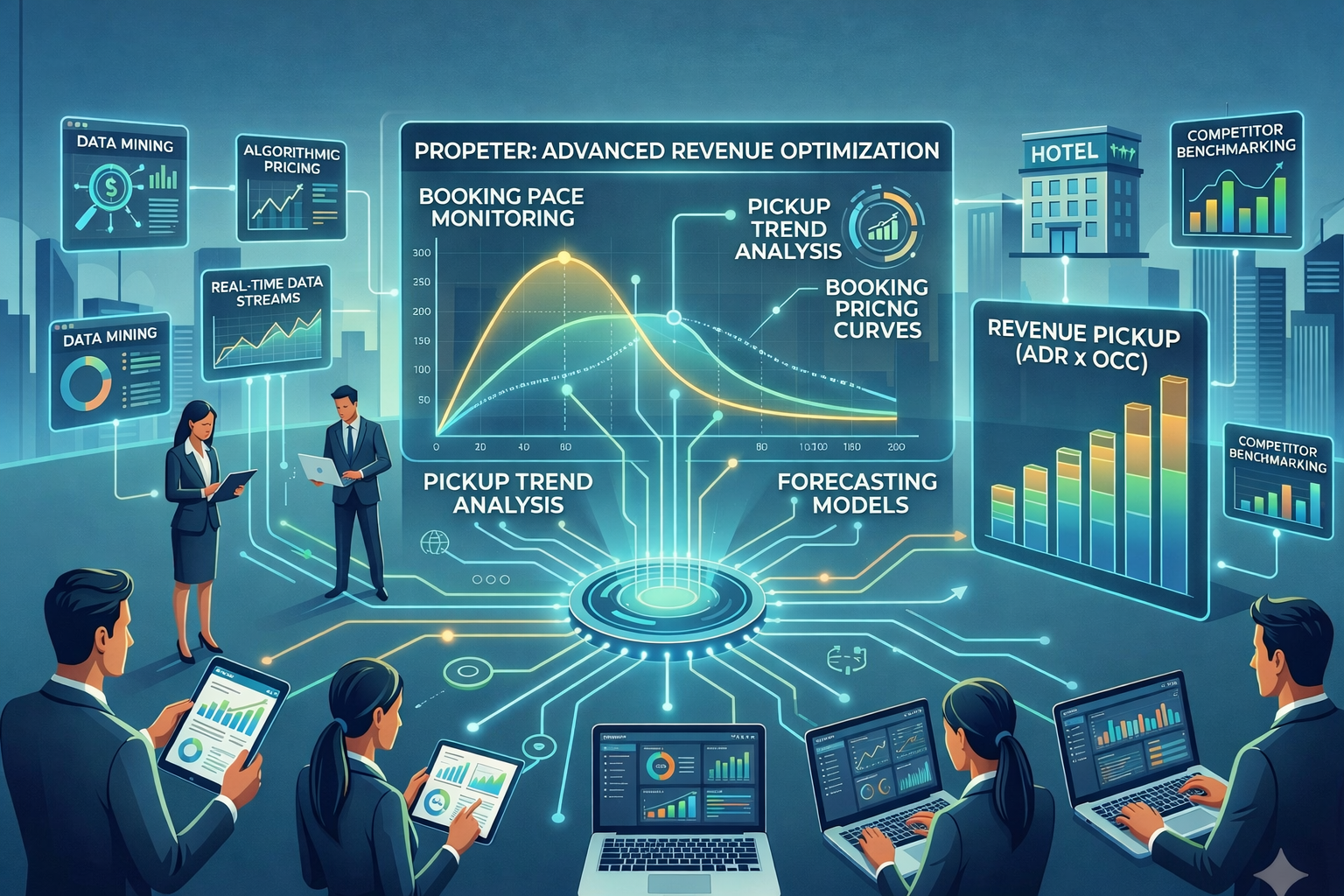
booking pace signals
competitor pricing trends
travel demand indicators.
Advanced revenue management systems combine these signals to predict how upcoming events will influence demand and pricing conditions.
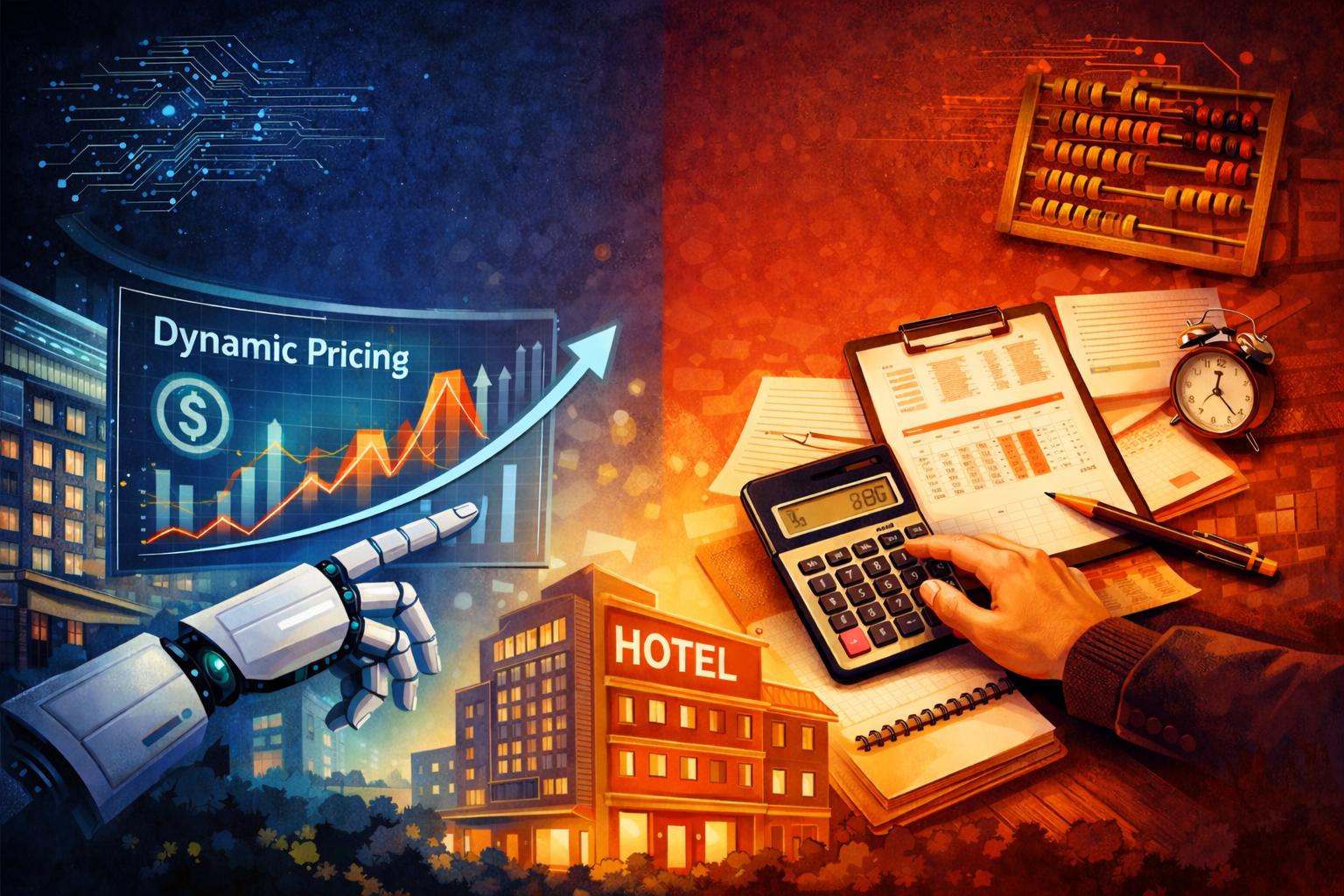
By integrating event demand forecasting with dynamic pricing systems, hotels can adjust rates automatically when demand signals appear.
Why Event Forecasting Matters for Revenue
Event-driven demand often creates some of the most profitable periods for hotels.
Hotels that forecast event demand effectively can:
raise room rates earlier
capture premium pricing during compression nights
allocate inventory strategically across channels
optimize staffing and operations.
Without proper forecasting, hotels risk selling rooms too cheaply before demand peaks.
Early demand detection allows hotels to position their pricing strategies strategically and maximize revenue during high-demand events.
Conclusion
Event demand forecasting is a critical component of hotel revenue management.
Major conferences, sporting events, and cultural festivals can dramatically increase travel demand, creating opportunities for hotels to optimize pricing and maximize revenue.
Hotels that monitor event calendars, analyze booking pace signals, and integrate forecasting tools into their pricing strategies gain a significant competitive advantage.
By anticipating event-driven demand early, hotels can capture higher room rates, improve occupancy performance, and maximize the revenue potential of high-demand periods.
Optimize Event-Based Pricing Strategies
Discover how Propeter’s intelligent pricing engine analyzes event demand signals and automatically adjusts hotel pricing for maximum revenue performance.