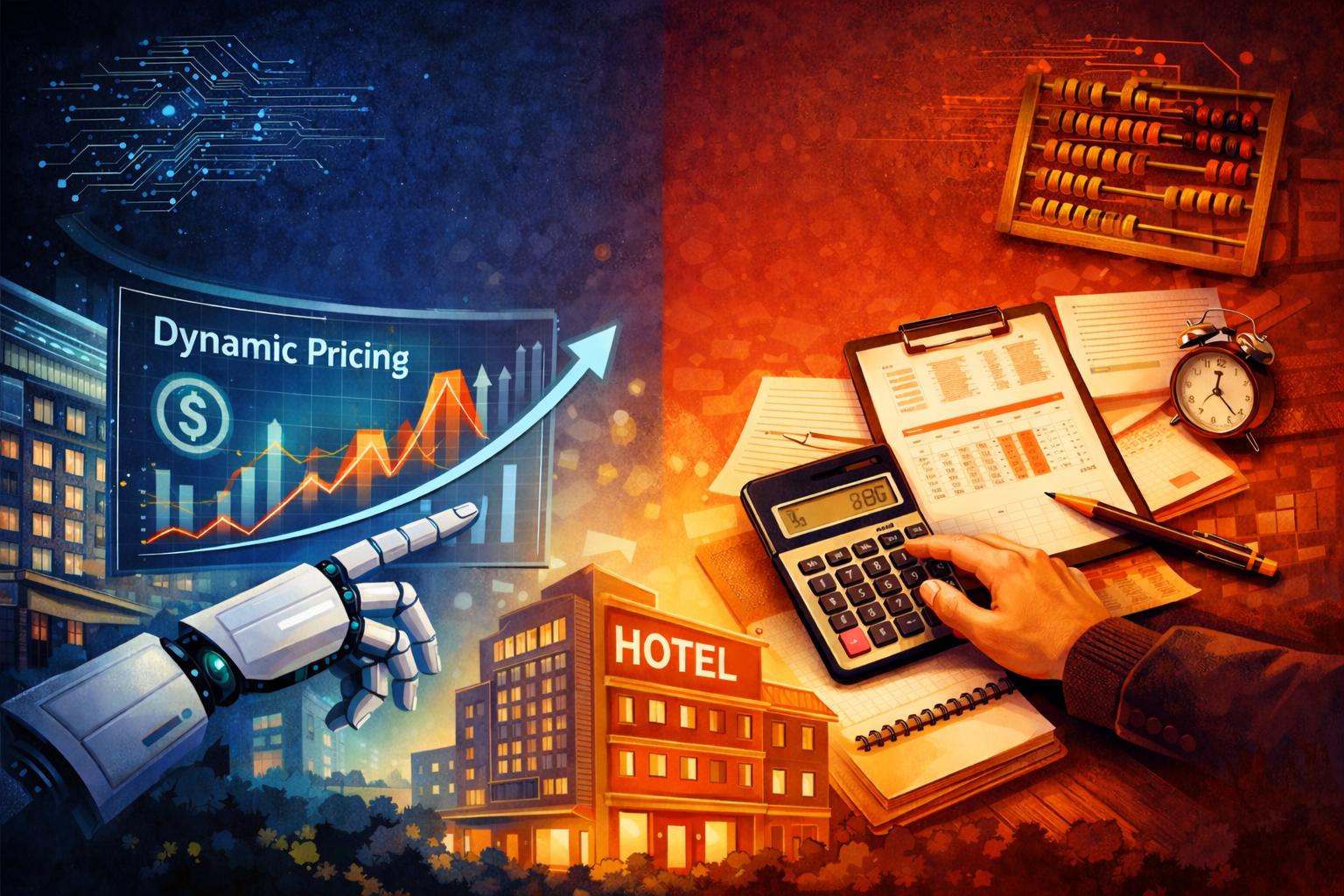
In today’s highly competitive hospitality market, static pricing models are no longer sufficient. Hotels must continuously adjust room rates based on real-time demand signals to maximize revenue and remain competitive.
This is where dynamic pricing strategies come into play.
Dynamic pricing allows hotels to change room rates based on factors such as demand levels, competitor pricing, booking pace, and market trends. Leading hospitality revenue management platforms such as Duetto and IDeaS Revenue Solutions have popularized dynamic pricing models that allow hotels to capture higher revenue during peak demand and stimulate bookings during slower periods.
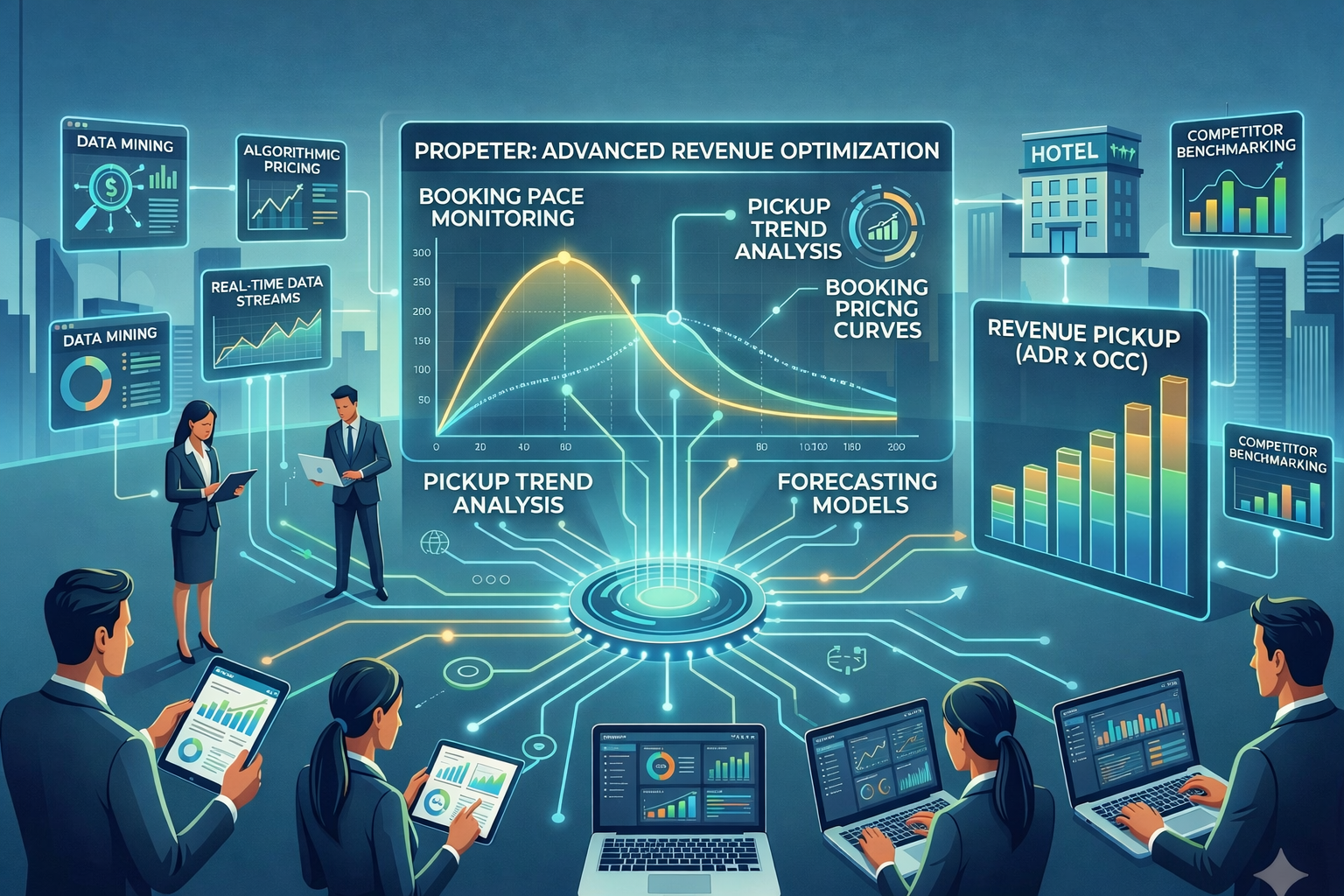
Modern systems like Propeter combine dynamic pricing with AI-driven demand forecasting and intelligent pricing engines to automate complex pricing decisions.
If you want a deeper overview of pricing models in hospitality, explore our Dynamic Pricing for Hotels guide.
What Dynamic Pricing Means in Hospitality
Dynamic pricing in hospitality refers to a pricing strategy where hotel room rates automatically adjust based on real-time market demand.
Unlike fixed pricing, dynamic pricing systems evaluate multiple demand signals simultaneously and recommend optimal prices for each date and room type.
Hotels using dynamic pricing typically analyze factors such as:
current occupancy levels
booking pace and pickup trends
competitor pricing
demand signals from local events
seasonal travel patterns.
The goal is to maximize revenue while maintaining competitive positioning in the market.
Dynamic pricing ensures hotels avoid two common pricing mistakes:
Underpricing during peak demand
Overpricing during low demand
Demand-Based Pricing
Demand-based pricing is one of the most widely used dynamic pricing strategies in hospitality.
This approach adjusts room rates based on expected demand levels.
For example:
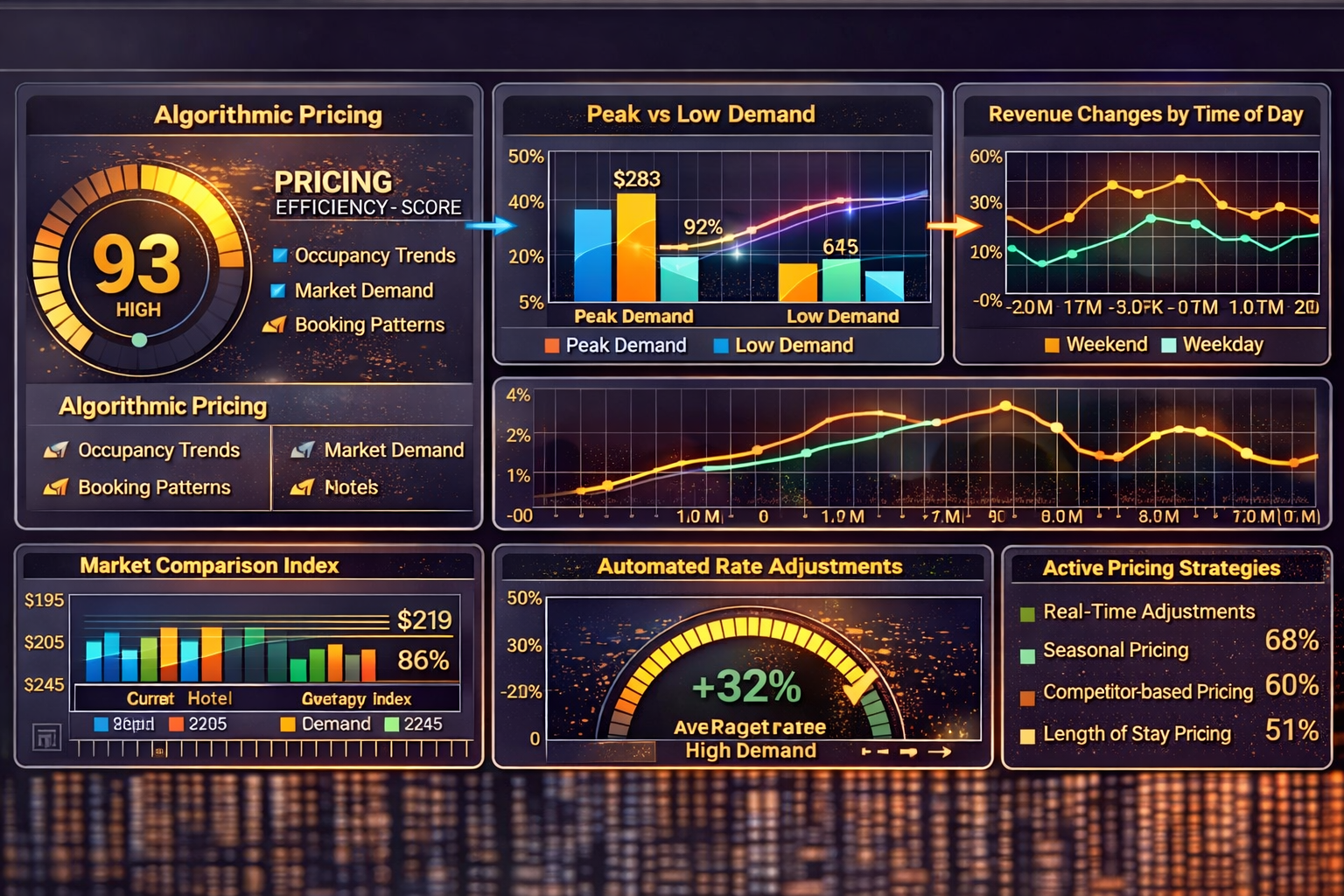
When occupancy is high, prices increase to capture higher willingness to pay.
When demand is weak, prices may decrease to stimulate bookings.
Demand signals used in pricing decisions often include:
occupancy percentage
booking pace trends
demand forecasts
market demand indicators.
Revenue management systems monitor these signals continuously and adjust prices accordingly.
When combined with predictive forecasting, demand-based pricing allows hotels to increase rates before competitors react to rising demand.
Competitor-Based Pricing
Hotels operate within a competitive market where guests often compare multiple properties before making a booking.
Competitor-based pricing strategies monitor pricing across a hotel’s competitive set and adjust rates accordingly.
Typical competitor pricing metrics include:
competitor minimum rate
competitor average rate
competitor maximum rate.
If a hotel is priced significantly below its competitors during strong demand periods, it may be leaving revenue on the table. Conversely, if it is priced significantly higher than competitors during low demand periods, occupancy may suffer.
Revenue management systems incorporate competitor pricing signals to ensure hotels remain competitively positioned while maximizing revenue potential.
Booking Window Pricing
Booking window pricing refers to adjusting rates based on how far in advance guests book their stay.
Hotels often observe different demand patterns depending on booking lead time.
Typical booking window pricing strategies include:
Early Booking Discounts
Guests who book far in advance may receive discounted rates to secure early demand.
Last-Minute Pricing
Guests booking close to arrival dates may pay higher prices if demand is strong.
Mid-Window Optimization
Hotels monitor booking pace within the booking window and adjust rates dynamically.
For example, if bookings are arriving faster than expected, the pricing engine may increase rates automatically.
Booking window pricing ensures hotels optimize revenue across the entire booking cycle.
Segment-Based Pricing
Different guest segments have different price sensitivities.
Revenue managers often divide guests into categories such as:
leisure travelers
corporate travelers
group bookings
long-stay guests.
Each segment may respond differently to pricing changes.
For example:
Corporate travelers may prioritize convenience and flexibility, while leisure travelers may be more price sensitive.
Segment-based pricing allows hotels to apply different pricing strategies to each guest segment, improving both occupancy and revenue.
AI Dynamic Pricing
Artificial intelligence has significantly improved the effectiveness of dynamic pricing in hospitality.
AI-powered pricing systems analyze large datasets and detect demand patterns that would be difficult for humans to identify manually.
Modern AI-driven pricing engines can:
forecast demand trends
detect booking pace acceleration
analyze competitor pricing shifts
predict demand spikes caused by events.
These insights allow pricing engines to adjust rates earlier and more accurately.
To learn how AI-powered pricing works, visit our AI Revenue Management guide.
How Propeter Enables Intelligent Dynamic Pricing
Propeter’s Intelligent Pricing Engine combines multiple pricing strategies with AI demand forecasting to generate optimal rate recommendations.
The platform uses an anchor-first pricing architecture, where a primary room type is priced using full demand intelligence and other room types derive their prices using differentials.
Key capabilities include:
multi-strategy pricing evaluation
AI demand forecasting
competitor intelligence
guardrail-protected pricing automation
transparent calculation breakdowns.
This approach allows hotels to automate pricing decisions while maintaining full visibility into how recommendations are generated.
Learn more about how our Intelligent Pricing Engine works.
Conclusion
Dynamic pricing has become a fundamental component of modern hotel revenue management.
By adjusting room rates based on demand signals, competitor positioning, and booking behavior, hotels can capture maximum revenue while maintaining competitive market positioning.
The most successful hotels combine dynamic pricing strategies with AI-powered revenue management systems that continuously analyze market conditions and optimize pricing automatically.
Ready to See Dynamic Pricing in Action?
Discover how Propeter helps hotels optimize pricing and maximize revenue with AI-powered revenue management.