Improving occupancy is one of the primary goals of hotel revenue management. Higher occupancy allows hotels to generate more revenue from their available room inventory while increasing operational efficiency.
However, increasing occupancy should not rely solely on discounting room rates. Hotels that focus only on lowering prices risk damaging long-term profitability and brand positioning.
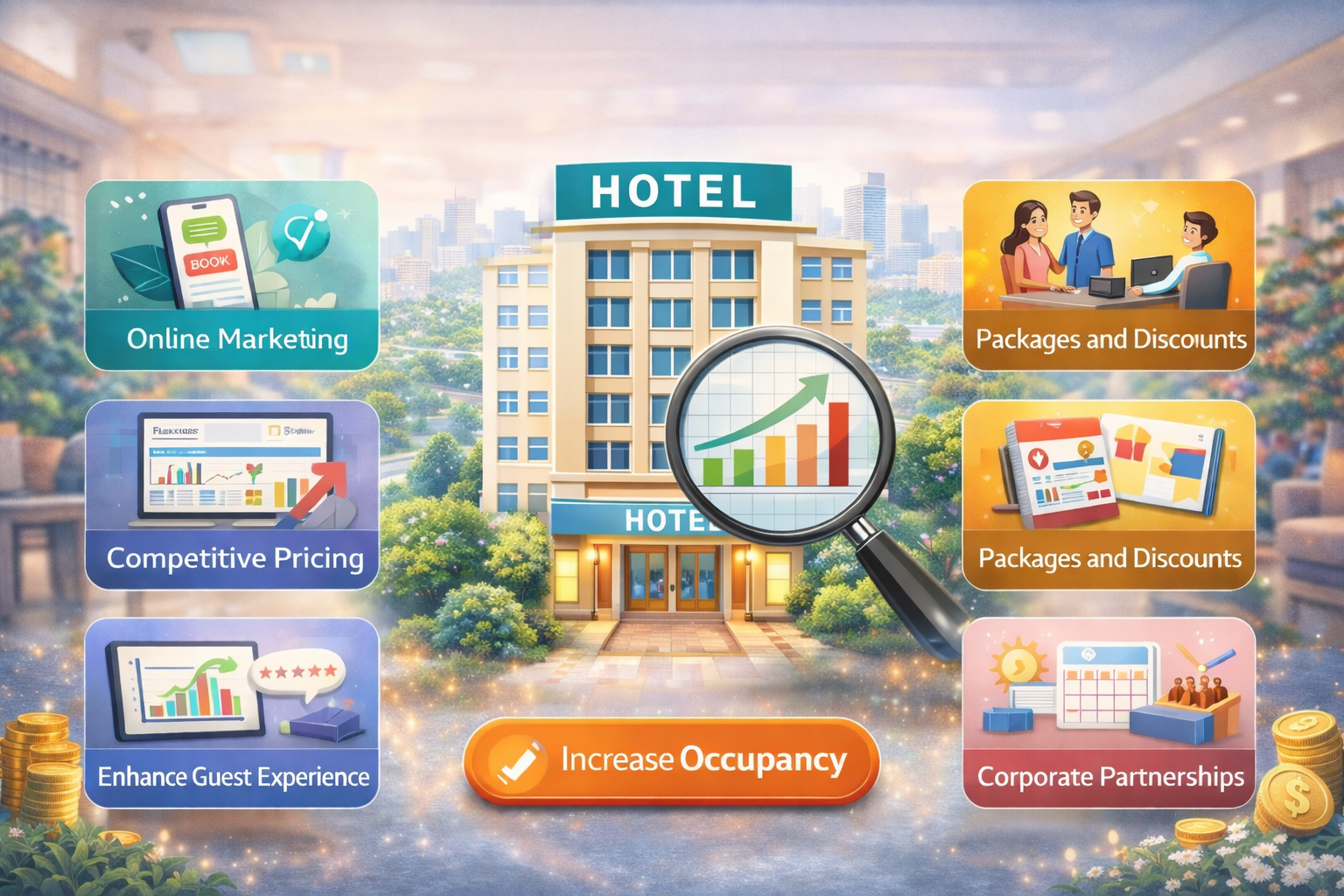
The most successful occupancy strategies combine demand generation, dynamic pricing adjustments, optimized distribution channels, and targeted promotions to attract the right guests while maintaining pricing integrity.
For a deeper understanding of how occupancy impacts revenue performance, explore our RevPAR Optimization Guide.
Demand Generation
Demand generation focuses on attracting new guests and increasing booking interest for your property.
Hotels can stimulate demand through several marketing and sales initiatives.
Digital Marketing Campaigns
Online advertising campaigns targeting travelers searching for accommodations in your destination can increase visibility and bookings.
Platforms such as search engines and social media allow hotels to reach travelers actively planning trips.
Content and SEO Strategy
Publishing helpful travel content and destination guides helps hotels attract organic traffic from search engines.
For example:
destination travel guides
event travel tips
seasonal travel recommendations.
These content strategies can generate direct bookings by capturing travelers early in their planning journey.
Partnerships and Local Collaborations
Hotels can partner with local businesses, tour operators, and attractions to create bundled experiences that attract travelers.
Examples include:
adventure tourism packages
culinary experiences
event-related accommodations.
Demand generation strategies ensure that hotels consistently attract new guests across different market segments.
Pricing Adjustments
Strategic pricing adjustments can also improve occupancy levels.
Instead of lowering rates across the board, hotels should apply targeted pricing strategies that respond to market demand.
Dynamic Pricing
Dynamic pricing adjusts room rates based on real-time demand signals such as occupancy levels, booking pace, and competitor pricing.
This allows hotels to remain competitive while maximizing revenue.
Learn more about dynamic pricing strategies in our Dynamic Pricing Guide.
Booking Window Pricing
Hotels may offer advance purchase discounts to encourage early bookings and secure base occupancy.
Demand-Based Price Adjustments
When demand weakens for certain dates, revenue managers can apply limited-time pricing incentives to stimulate bookings.
Strategic pricing adjustments help maintain competitiveness without undermining overall pricing strategy.
Channel Distribution
Distribution channels play an important role in improving hotel occupancy.
Hotels typically distribute inventory across multiple booking platforms, including:
direct booking websites
online travel agencies (OTAs)
global distribution systems (GDS)
corporate travel platforms.
Each channel provides access to different guest segments.
Online Travel Agencies
OTAs can generate significant booking demand and improve visibility in competitive markets.
Direct Booking Channels
Encouraging direct bookings through the hotel website helps reduce commission costs and improve profitability.
Corporate and Group Sales
Corporate agreements and group bookings can generate consistent demand during weekdays or low-demand periods.
Optimizing channel distribution ensures hotels reach the widest possible audience while balancing acquisition costs.
Promotions and Packages
Promotions and bundled packages can stimulate bookings during slower demand periods.
These offers provide added value to guests without relying solely on lower room rates.
Examples include:
Stay Packages
Bundling accommodations with additional services such as breakfast, spa access, or dining credits.
Seasonal Promotions
Special offers aligned with seasonal travel patterns or local events.
Loyalty Incentives
Reward programs and returning guest benefits encourage repeat bookings.
Extended Stay Offers
Discounted rates for longer stays can increase occupancy and improve operational efficiency.
Promotions and packages help attract new guests while maintaining strong pricing positioning.
Combining Occupancy Strategies for Maximum Impact
Successful occupancy strategies rarely rely on a single tactic.
Instead, hotels combine multiple approaches including:
demand generation marketing
dynamic pricing adjustments
optimized distribution channels
targeted promotions and packages.
When these strategies work together, hotels can improve occupancy while maintaining healthy room rates and long-term revenue growth.
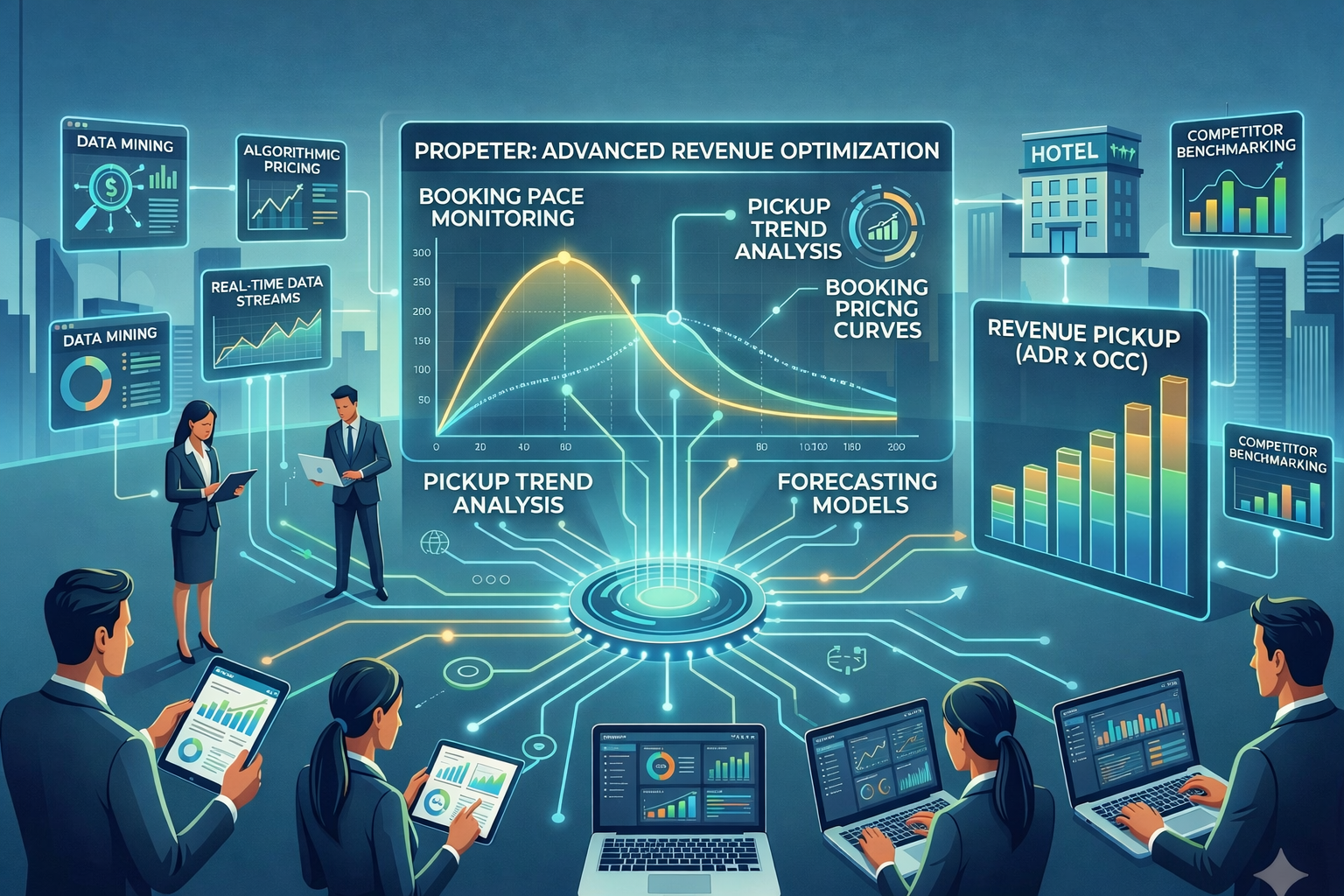
Modern revenue management platforms help hotels analyze demand patterns and recommend strategies that balance occupancy and revenue performance.
Conclusion
Increasing hotel occupancy requires a thoughtful combination of marketing, pricing, and distribution strategies.
Hotels that focus on demand generation, dynamic pricing, channel optimization, and targeted promotions can fill more rooms without compromising profitability.
By implementing data-driven occupancy strategies, hotels can improve both short-term booking performance and long-term revenue growth.
Optimize Your Hotel Revenue Strategy
Discover how Propeter’s intelligent pricing engine helps hotels increase occupancy and revenue through dynamic pricing and demand-driven optimization.