In the highly competitive hospitality industry, hotel pricing decisions are heavily influenced by the rates offered by nearby competitors. Travelers often compare multiple hotels before booking, making competitive positioning a crucial factor in revenue management.
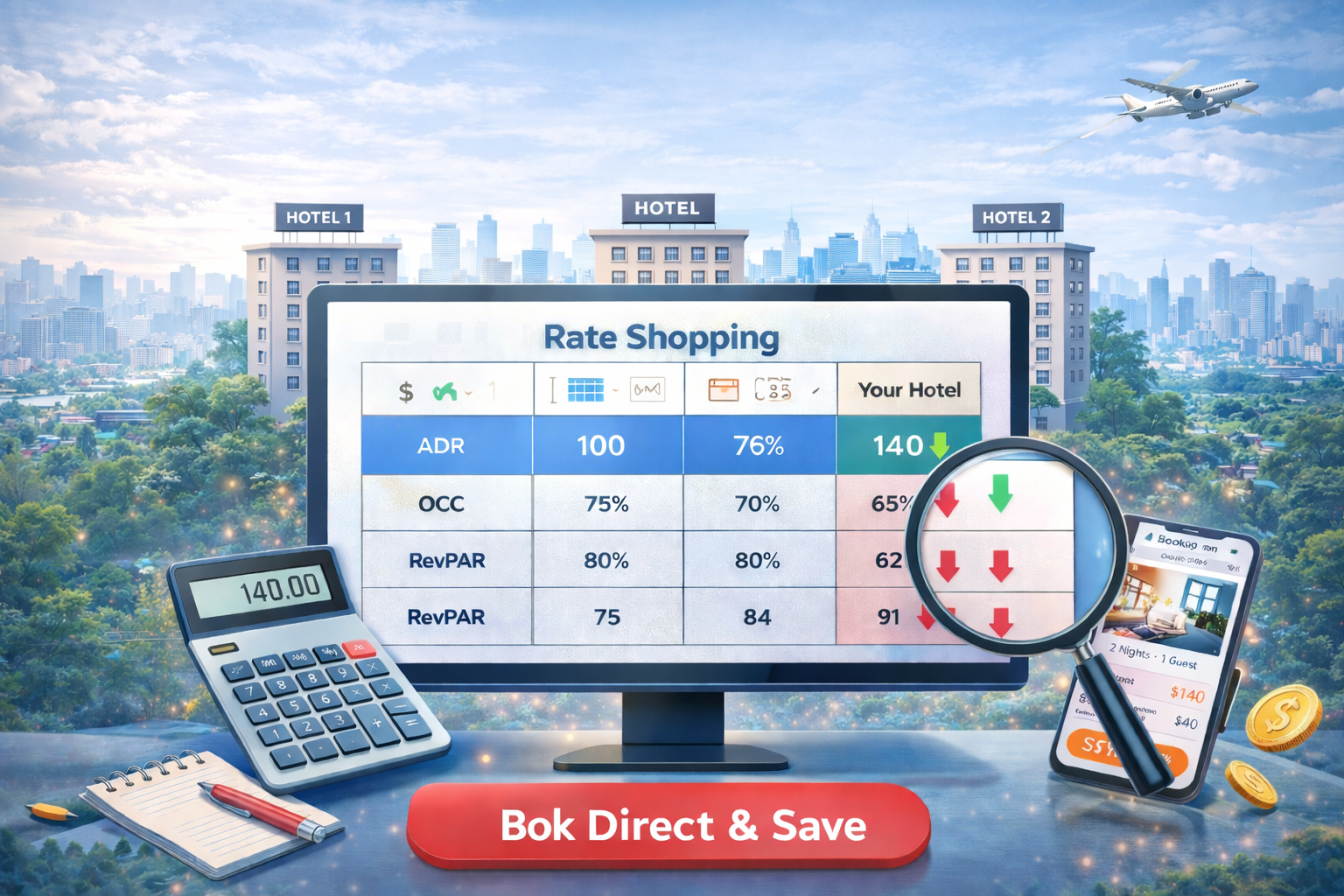
To stay competitive, hotels use rate shopping tools to monitor competitor prices and analyze market positioning. Rate shopping helps revenue managers understand how their room rates compare to other hotels in the same market and adjust pricing strategies accordingly.
Competitor rate monitoring is an essential component of modern revenue management and supports dynamic pricing, demand forecasting, and market positioning strategies.
Rate Shopping Tools
Rate shopping tools are specialized software platforms designed to collect and analyze competitor pricing data across multiple distribution channels.
These tools automatically track room rates from competing hotels on online travel agencies (OTAs), booking websites, and other distribution platforms.
Typical features of rate shopping tools include:
real-time competitor rate monitoring
historical rate trend analysis
automated alerts when competitor prices change
rate comparison dashboards.
By aggregating competitor data in one platform, rate shopping tools provide revenue managers with a clear view of market pricing conditions.
This allows hotels to react quickly when competitors adjust their rates.
Compset Monitoring
A competitive set, often called a compset, is a group of hotels that compete directly with a property for the same guests.
Hotels typically select compset properties based on factors such as:
location
star rating or property category
room inventory size
target guest segments.
Monitoring a compset helps hotels evaluate their market position relative to competitors.
Revenue managers often analyze compset metrics such as:
minimum competitor rate
average competitor rate
maximum competitor rate
competitor occupancy indicators.
These insights help determine whether a hotel is priced competitively within its market segment.
For example:
If a hotel’s price is significantly lower than competitors during high demand periods, it may be missing revenue opportunities.
If a hotel’s price is much higher than competitors during weak demand periods, it may struggle to attract bookings.
Regular compset monitoring ensures pricing remains aligned with market conditions.
Pricing Analysis
Rate shopping data becomes most valuable when combined with broader pricing analysis.
Revenue managers analyze competitor pricing trends alongside internal demand signals such as:
occupancy levels
booking pace
demand forecasts
seasonal travel patterns.
This analysis helps hotels determine how aggressively they should price their rooms.
For example:
Competitive Pricing
If competitor prices are increasing due to strong demand, a hotel may increase its rates to capture higher revenue.
Strategic Undercutting
In some situations, hotels may price slightly below competitors to attract price-sensitive travelers.
Premium Positioning
Luxury or high-end hotels may maintain higher prices to reinforce premium positioning and brand perception.
Rate shopping data allows hotels to evaluate these strategies with greater accuracy.
Why Rate Shopping Matters
Effective rate shopping helps hotels remain competitive while maximizing revenue.
Key benefits include:
improved market awareness
faster response to competitor pricing changes
better pricing positioning within the market
stronger revenue optimization.
Without competitor monitoring, hotels risk mispricing their inventory—either leaving revenue on the table or pricing themselves out of the market.
Rate shopping provides the market intelligence necessary to make informed pricing decisions.
How Revenue Management Systems Use Rate Shopping Data
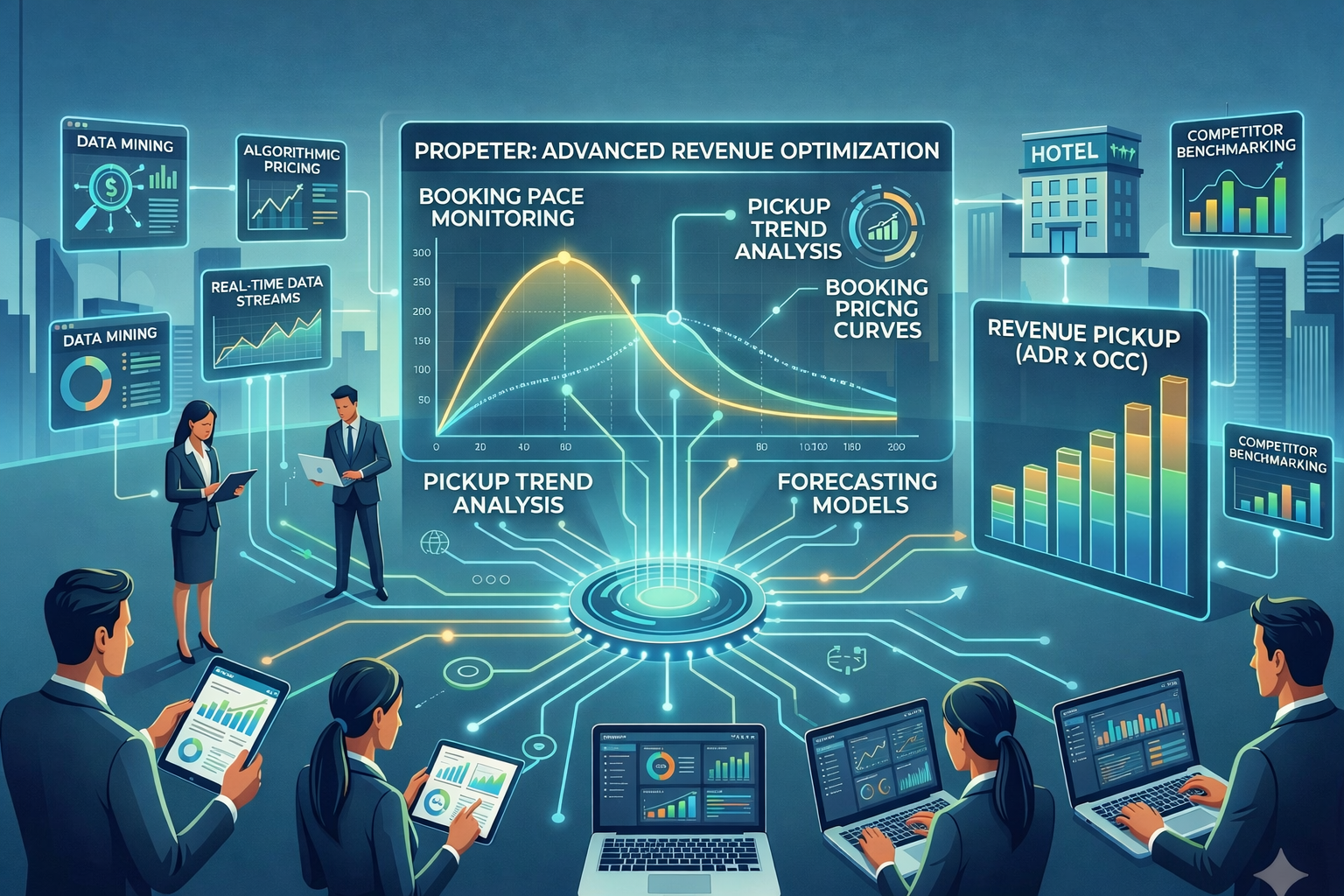
Modern revenue management systems integrate rate shopping data directly into pricing algorithms.
These systems analyze competitor pricing signals alongside other demand indicators such as:
occupancy forecasts
booking pace trends
event demand signals
market demand indexes.
By combining these data sources, pricing engines can recommend optimal room rates that balance competitiveness and profitability.
Automated pricing systems also update recommendations as competitor prices change, ensuring hotels remain aligned with market conditions.
Conclusion
Rate shopping is a fundamental practice in hotel revenue management.
By monitoring competitor prices and analyzing market positioning, hotels can make smarter pricing decisions and remain competitive in dynamic hospitality markets.
Rate shopping tools provide valuable insights into competitor pricing behavior, helping revenue managers respond quickly to changing market conditions.
When combined with demand forecasting and dynamic pricing systems, competitor rate monitoring becomes a powerful driver of revenue optimization.
Discover Intelligent Competitive Pricing
Learn how Propeter’s intelligent pricing engine analyzes competitor pricing data and automatically adjusts hotel room rates to maximize revenue performance.