
In hospitality pricing, how a price looks can influence guest behavior just as much as the price itself.
Two room rates that differ by just one dollar—such as $199 vs $200—can lead to noticeably different booking conversion rates. This phenomenon is explained by pricing psychology, a concept widely used in retail, e-commerce, and increasingly in hotel revenue management.
Modern pricing systems used by hotels and revenue teams incorporate psychological pricing strategies to make rates appear more attractive and improve conversion without reducing revenue.
If you want to understand how psychological pricing fits into broader pricing strategies, explore our Dynamic Pricing for Hotels guide.
Why Pricing Psychology Works
Pricing psychology works because human decision-making is not purely rational. Guests often rely on perception shortcuts when evaluating prices.
Several cognitive biases influence how people interpret prices:
Left-Digit Effect
Consumers tend to focus more on the first digit of a price rather than the overall value.
For example:
$199 appears significantly cheaper than $200
even though the difference is only $1.
Anchoring Bias
Guests compare prices relative to a reference point.
If a premium room is listed at $299 and another at $249, the $249 option appears significantly better value—even if both are above the guest’s initial budget.
Perceived Value
Prices that end in certain digits may signal value, luxury, or promotional pricing depending on the context.
Hotels use these psychological cues to influence booking decisions while maintaining profitable rates.
The $199 vs $200 Example
One of the most famous examples of pricing psychology is the $199 vs $200 effect.
Although the price difference is minimal, many guests perceive $199 as significantly cheaper because the first digit changes from 2 to 1.
This effect occurs because the human brain reads prices from left to right and tends to categorize $199 closer to $100 than to $200.
In hotel booking environments where guests compare multiple properties quickly, these small psychological cues can meaningfully impact booking decisions.
For this reason, many hotel pricing strategies use rates ending in 9, 5, or 0 depending on the pricing positioning.
Charm Pricing Strategies
Charm pricing is one of the most common psychological pricing techniques used in hospitality.
Charm pricing refers to setting prices just below round numbers, typically ending in 9.
Examples include:
$99
$149
$199
$249
Charm pricing creates the perception of a better deal without significantly reducing revenue.
Hotels frequently apply charm pricing to:
standard room rates
promotional offers
discounted advance purchase rates.
Charm pricing works particularly well for leisure travelers who tend to compare prices across multiple booking platforms.
Rate Rounding Techniques
Revenue management systems often use automated rate rounding rules to apply psychological pricing consistently.
These rounding rules adjust calculated prices so they end in specific digits that are known to perform well.
Examples include:
Common experiments include:
Charm Pricing vs Round Pricing
Testing whether rates ending in 9 perform better than round numbers.
Example:
$199 vs $200
Tiered Pricing Anchors
Displaying a premium room category to anchor the value perception of lower-priced rooms.
Example:
Suite → $399
Deluxe → $299
Standard → $199
Guests often perceive the standard room as better value when premium options are visible.
Discount Framing
Showing savings relative to a higher reference price.
Example:
“Save $50 tonight”
“Was $249 → Now $199”
This framing increases perceived value.
Revenue managers often run controlled experiments to determine which pricing formats generate the highest conversion rates.
Psychological Pricing in Modern Revenue Management
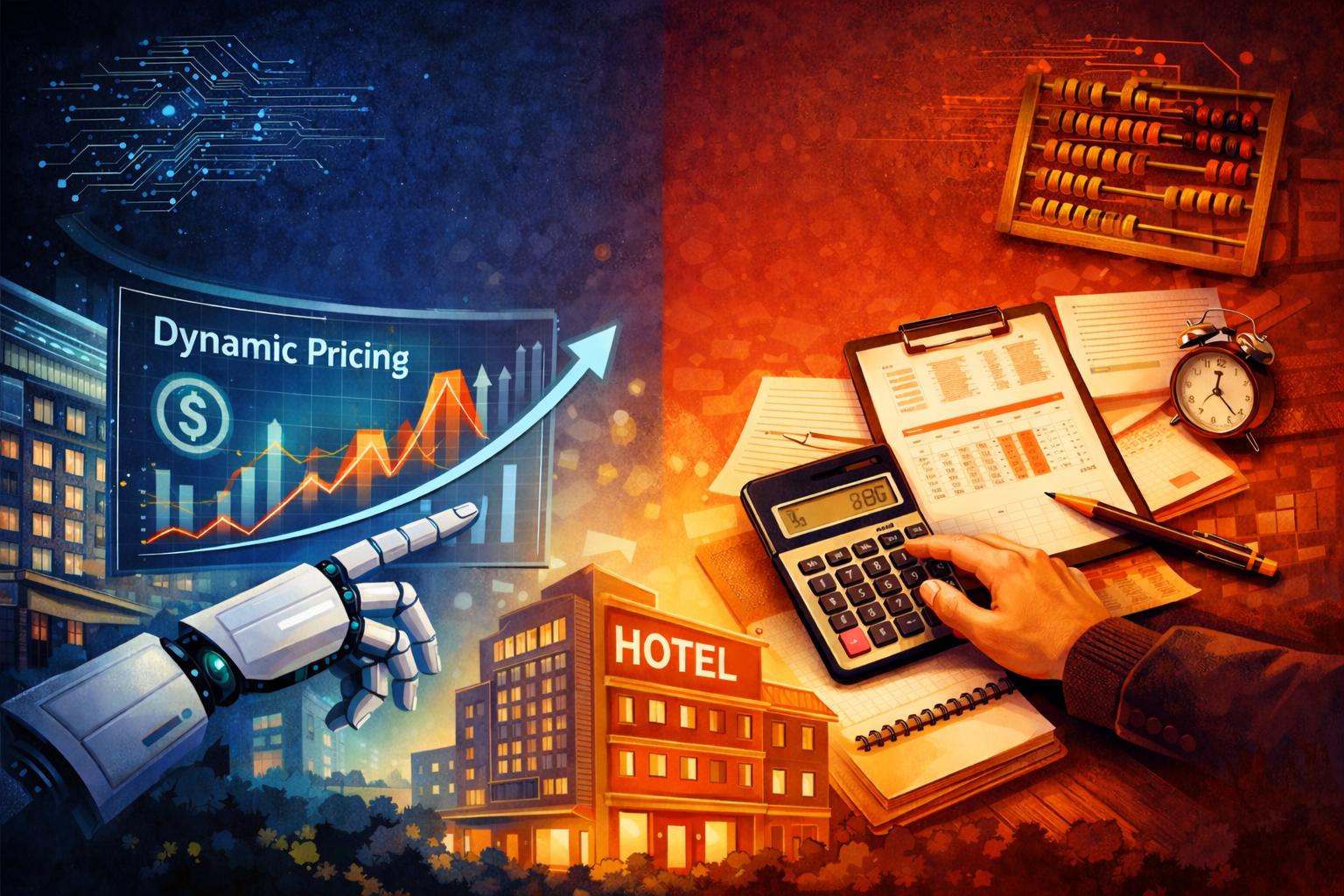
Psychological pricing works best when integrated with dynamic pricing and automated revenue management systems.
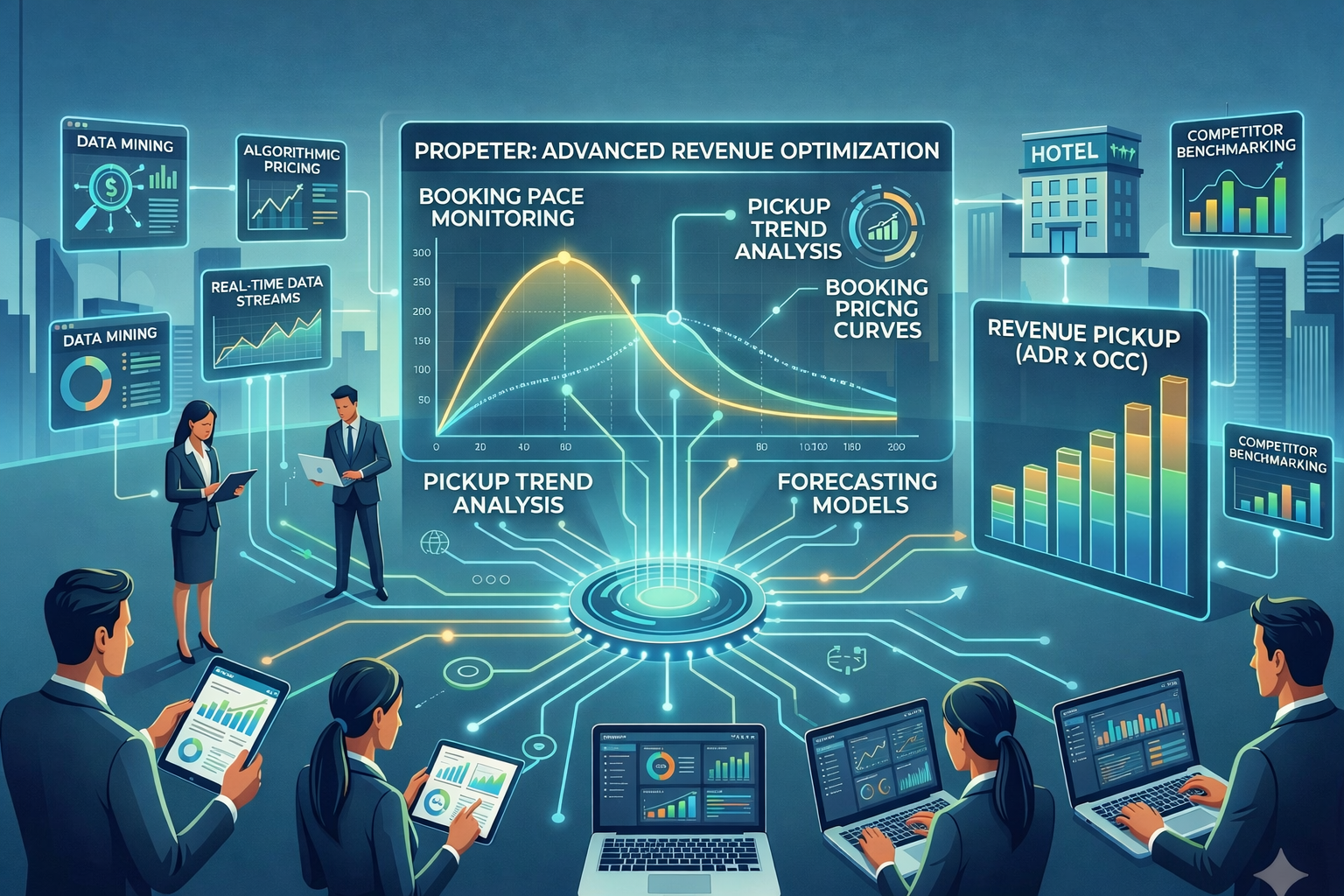
Modern pricing platforms calculate optimal room rates using demand signals and then apply rounding rules to ensure the final price is both optimal and psychologically appealing.
Propeter’s Intelligent Pricing Engine applies rate-plan-specific rounding rules after calculating the optimal rate. This ensures the final published rate maximizes both revenue and booking conversion.
By combining demand-based pricing with behavioral pricing psychology, hotels can improve both ADR performance and booking conversion rates.
Conclusion
Psychological pricing plays a crucial role in modern hospitality revenue management.
Small changes in price presentation—such as using charm pricing, rounding strategies, or price anchoring—can significantly influence guest perception and booking decisions.
When combined with dynamic pricing and intelligent pricing engines, psychological pricing helps hotels optimize both revenue and conversion performance.
Hotels that understand pricing psychology can gain a competitive advantage without lowering prices.
Learn How Smart Pricing Drives Higher Revenue
Discover how Propeter’s Intelligent Pricing Engine combines demand forecasting, pricing strategies, and psychological pricing techniques to optimize hotel rates automatically.