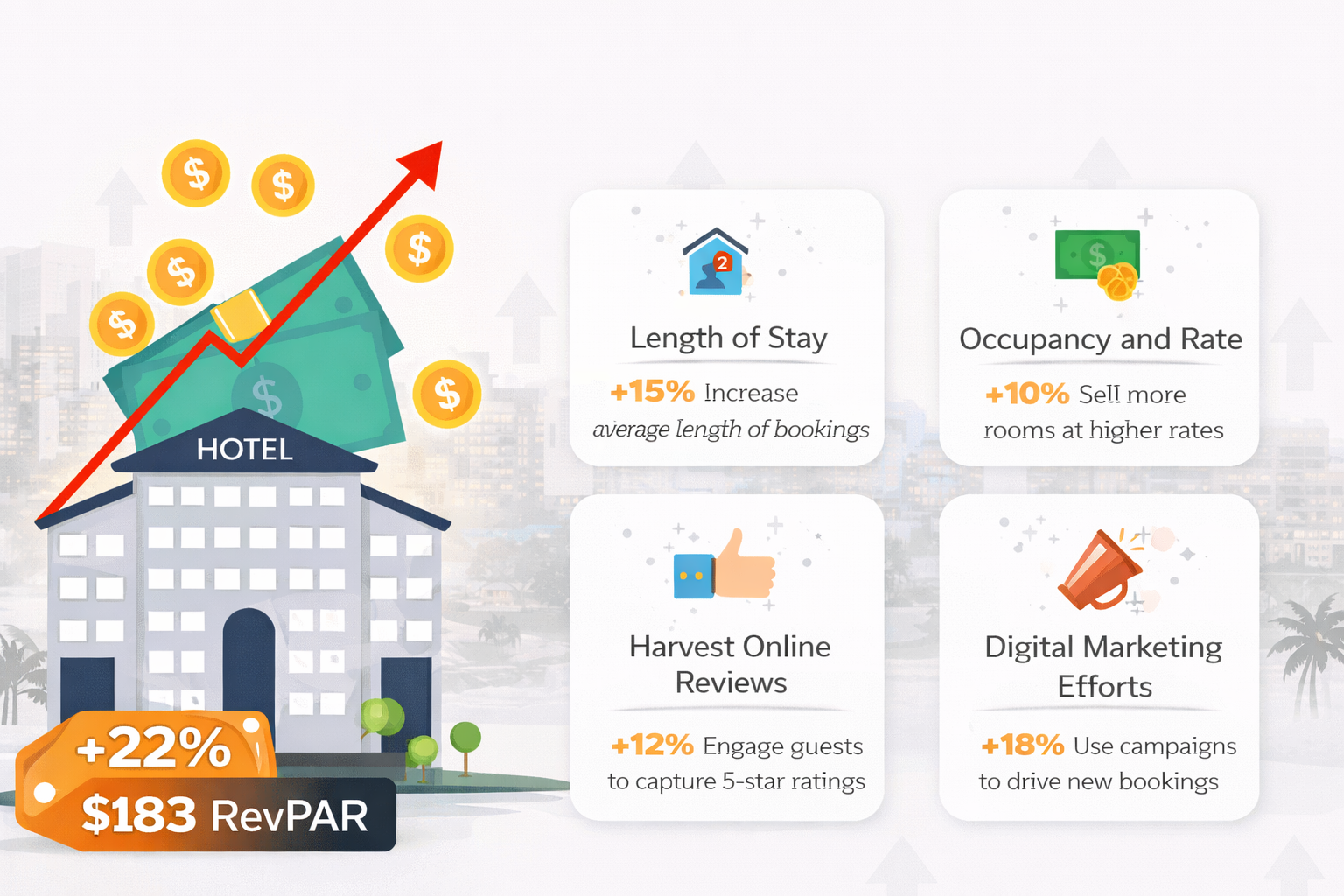
RevPAR (Revenue per Available Room) is one of the most important performance metrics in hotel revenue management. It measures how effectively a hotel converts available room inventory into revenue by combining both occupancy and pricing performance.
Many hotels assume that improving RevPAR requires lowering room rates to increase occupancy. However, this approach can damage long-term profitability and brand positioning.
In reality, the most successful hotels increase RevPAR through smarter revenue strategies that optimize pricing, demand forecasting, guest segmentation, and distribution channels without relying on heavy discounting.
For a deeper understanding of how RevPAR works and why it matters, explore our RevPAR Optimization Guide.
Dynamic Pricing
Dynamic pricing is one of the most effective ways to improve RevPAR without lowering rates.
Instead of maintaining fixed prices, dynamic pricing systems adjust room rates based on real-time demand signals such as:
occupancy levels
booking pace
competitor pricing
seasonal demand patterns
local events and travel trends.
When demand increases, dynamic pricing allows hotels to raise rates to capture higher revenue. When demand weakens, prices can adjust strategically to stimulate bookings without excessive discounting.
Dynamic pricing ensures that hotels consistently capture the highest possible value for each room night.
To understand how dynamic pricing works in hospitality, read our Dynamic Pricing Guide.
Demand Forecasting
Accurate demand forecasting allows hotels to anticipate future demand and adjust pricing strategies proactively.
By predicting future occupancy trends, revenue managers can increase rates earlier when strong demand is expected.
Demand forecasting models analyze factors such as:
historical booking patterns
seasonal travel trends
local events and conferences
booking pace signals
market demand indicators.
When forecasts indicate strong demand for specific dates, hotels can increase prices before competitors react, improving overall RevPAR performance.
Conversely, if demand is expected to be weak, hotels can introduce targeted promotions rather than broad discounts.
Forecasting allows revenue teams to make data-driven pricing decisions that improve revenue outcomes.
Upselling Strategies
Upselling is another powerful way to increase RevPAR without lowering base room rates.
Upselling encourages guests to upgrade to higher-value room types or purchase additional services.
Common hotel upselling strategies include:
Room Upgrades
Offering guests the option to upgrade to premium room categories, suites, or rooms with better views.
Pre-Arrival Upselling
Sending upgrade offers to guests before arrival through email or mobile notifications.
Bundled Packages
Creating packages that include room upgrades with additional services such as spa access, dining credits, or airport transfers.
Personalized Offers
Using guest data and booking history to recommend relevant upgrades.
Upselling increases the average revenue per booking while maintaining the hotel’s pricing integrity.
Channel Optimization
Distribution channel strategy plays a critical role in RevPAR performance.
Hotels distribute inventory across multiple channels including:
direct booking websites
online travel agencies (OTAs)
corporate booking platforms
travel agents.
Each channel has different commission structures and pricing dynamics.
Optimizing channel mix helps hotels increase RevPAR by reducing distribution costs and improving booking profitability.
Key channel optimization strategies include:
Increasing Direct Bookings
Direct bookings typically generate higher margins because they avoid OTA commission fees.
Strategic OTA Pricing
OTAs provide valuable demand visibility but should be balanced with direct distribution strategies.
Channel-Specific Promotions
Different promotions can be targeted to specific channels to attract the right guest segments.
Effective channel management ensures that hotels maximize revenue from each booking while maintaining competitive pricing.
Why RevPAR Improvement Requires a Holistic Strategy
Improving RevPAR requires more than simply adjusting room prices. Successful revenue strategies combine multiple factors, including:
dynamic pricing systems
accurate demand forecasting
upselling opportunities
optimized distribution channels.
When these strategies work together, hotels can increase both ADR and occupancy without relying on aggressive discounting.
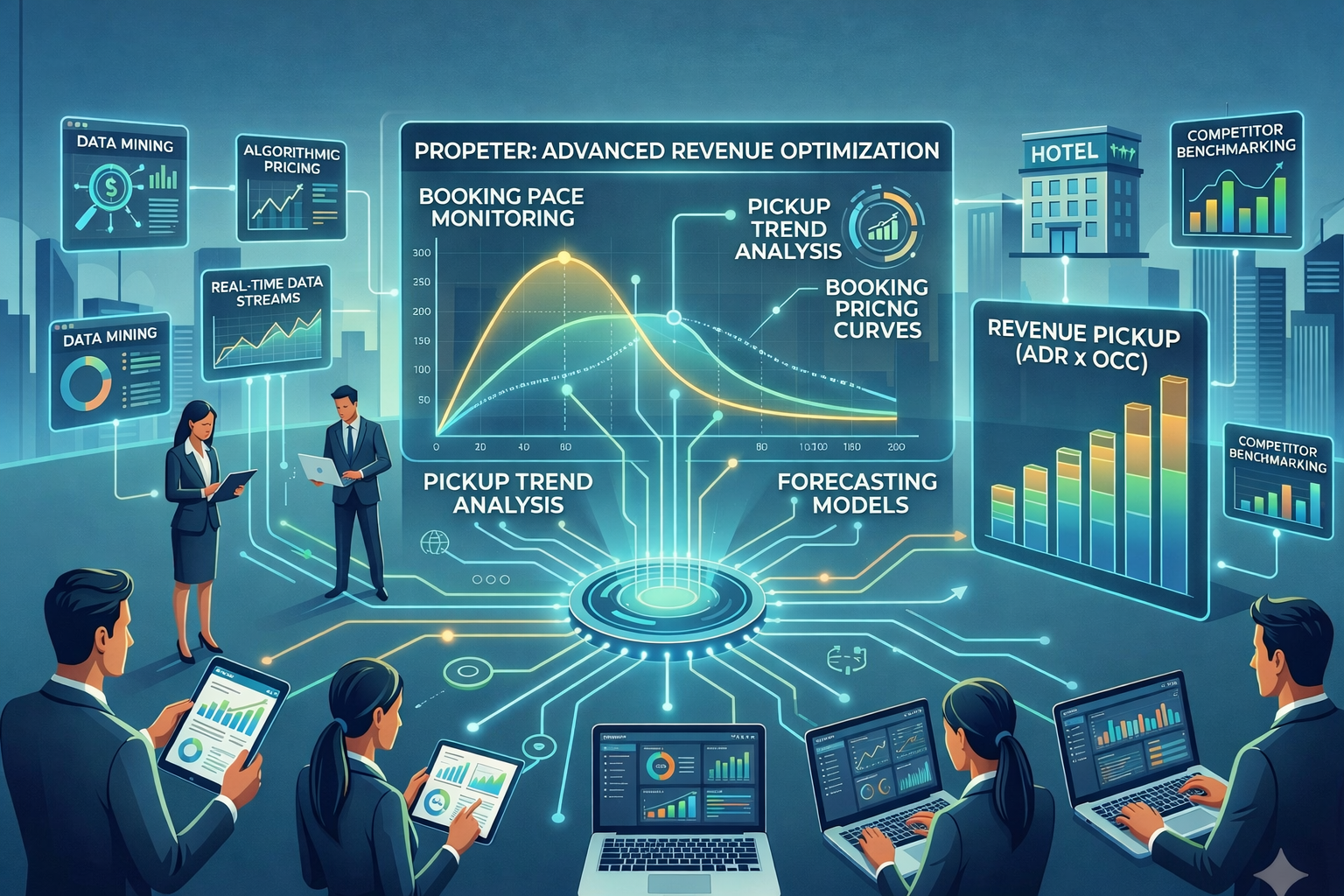
Modern revenue management platforms integrate these signals automatically to help hotels optimize pricing and revenue performance.
Conclusion
Increasing RevPAR without lowering rates is achievable when hotels adopt smarter revenue management strategies.
Dynamic pricing, demand forecasting, upselling, and channel optimization allow hotels to maximize revenue while maintaining strong pricing power.
Hotels that rely solely on discounts to improve occupancy risk eroding profitability and weakening brand positioning.
By adopting intelligent revenue strategies and automated pricing tools, hotels can grow revenue sustainably and improve long-term financial performance.
Optimize Your Hotel Revenue Strategy
Discover how Propeter’s intelligent pricing engine helps hotels increase RevPAR by combining demand forecasting, dynamic pricing, and automated revenue optimization.