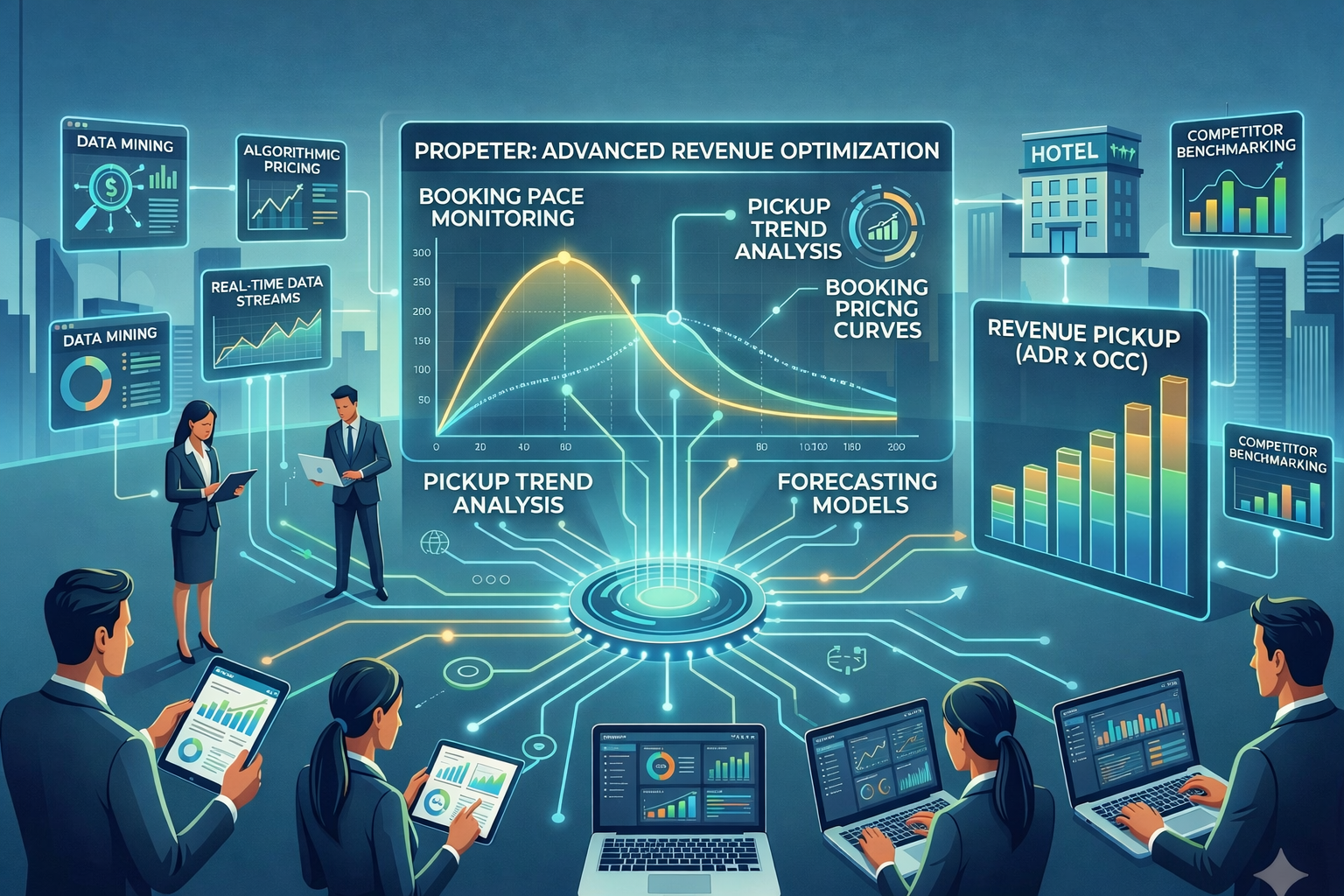
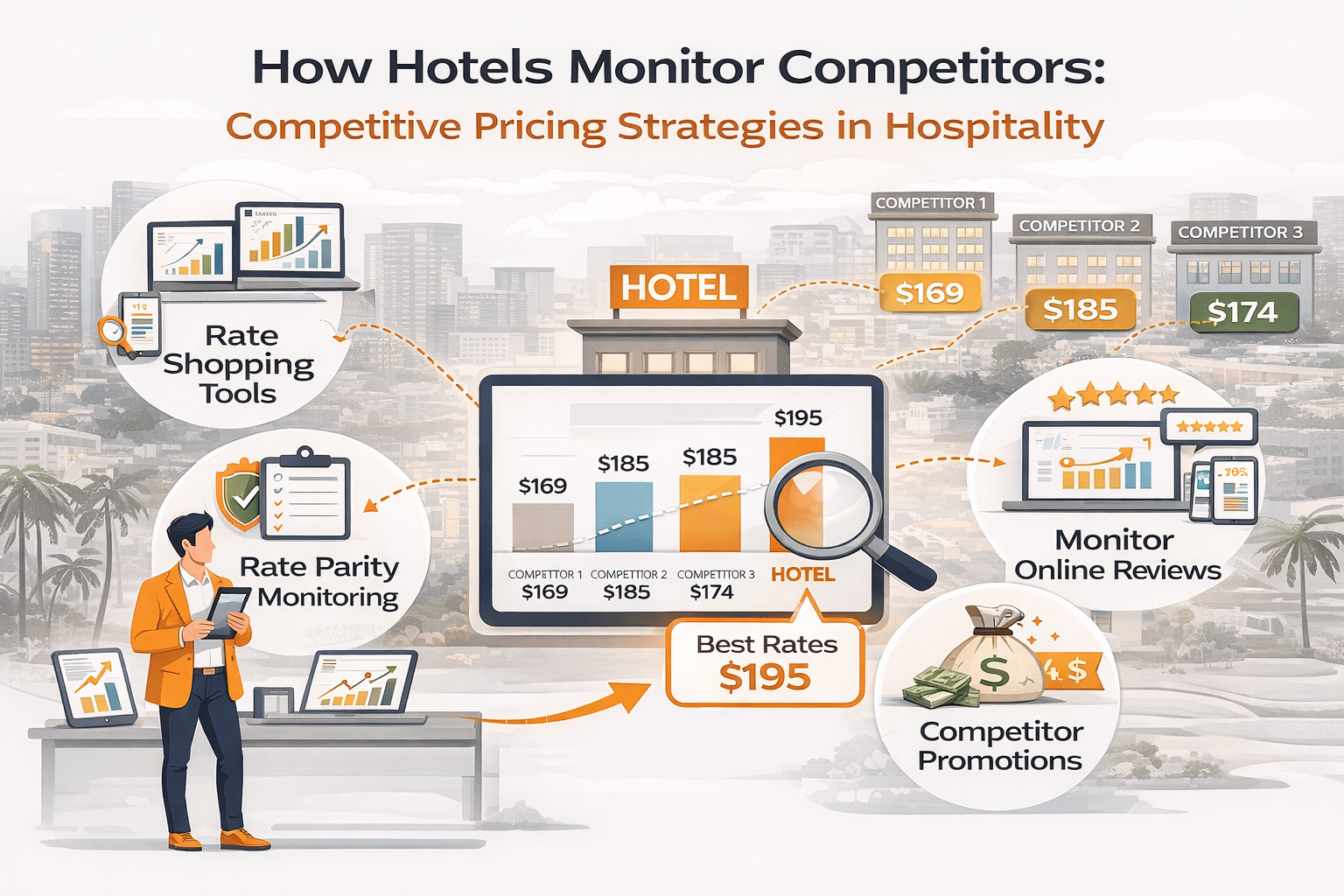
By analyzing competitor data alongside internal demand signals, revenue managers can make smarter pricing decisions that balance competitiveness and profitability.
Competitor monitoring is closely connected to rate shopping and dynamic pricing strategies, which help hotels respond quickly to changes in market conditions.
Compset Strategy
The first step in competitor monitoring is defining a competitive set, often called a compset.
A compset is a group of hotels that compete directly for the same type of guests.
Hotels typically choose competitors based on several factors:
geographic location
star rating or property category
price positioning
target guest segments
amenities and service offerings.
For example, a four-star city hotel may select other upscale properties within the same neighborhood as its compset.
Once a compset is defined, revenue managers regularly monitor competitor pricing, availability, and demand trends.
Analyzing compset data helps hotels understand their position within the market and determine whether their pricing strategy aligns with competitor behavior.
Competitor Tracking Methods
Hotels use several methods to track competitor pricing and market conditions.
Rate Shopping Tools
Specialized rate shopping software automatically collects competitor pricing data from multiple online booking platforms.
These tools provide dashboards that display:
competitor room rates
price trends over time
price differences between hotels.
Automated rate shopping tools allow revenue managers to monitor the market continuously without manually checking competitor websites.
OTA Monitoring
Revenue managers often analyze pricing on online travel agencies (OTAs) where travelers commonly compare hotels.
Monitoring OTA listings provides insights into:
competitor promotional offers
package deals
pricing changes.
Market Reports
Hotels may also use industry reports and benchmarking tools that provide aggregated market data.
These reports often include metrics such as:
market occupancy levels
average daily rates across the market
demand trends for the destination.
Combining these data sources gives hotels a comprehensive view of competitive market conditions.
Pricing Response Strategies
Once competitor data has been analyzed, revenue managers can decide how to respond strategically.
Several pricing response strategies are commonly used in hospitality.
Competitive Pricing
Hotels may adjust their rates to remain aligned with competitor pricing when demand conditions are similar.
Value-Based Pricing
Some hotels maintain slightly higher prices than competitors while emphasizing superior service, amenities, or location advantages.
Strategic Undercutting
During periods of weak demand, hotels may offer slightly lower prices to attract price-sensitive travelers.
Premium Positioning
Luxury or boutique hotels may intentionally price above competitors to reinforce their premium brand positioning.
The goal of competitor monitoring is not simply to match competitor prices but to understand the broader market context and make informed pricing decisions.
How Revenue Management Systems Monitor Competitors
Modern revenue management systems automatically integrate competitor pricing data into pricing algorithms.
These systems analyze competitor rates alongside other demand signals such as:
occupancy forecasts
booking pace trends
event demand indicators
seasonal demand patterns.
By combining competitor intelligence with internal demand data, pricing engines can recommend room rates that maximize revenue while remaining competitive in the market.
Automated competitor monitoring also allows hotels to respond quickly when market conditions change.
Why Competitor Monitoring Matters
Effective competitor monitoring provides several benefits for hotel revenue management.
Hotels that actively track competitor pricing can:
maintain competitive positioning
detect market demand changes early
optimize pricing strategies
avoid pricing mistakes that reduce bookings.
Without competitor monitoring, hotels risk misaligning their prices with market conditions, potentially losing revenue opportunities.
Conclusion
Competitor monitoring is an essential part of hotel revenue management.
By analyzing competitor pricing, market positioning, and demand trends, hotels can make smarter pricing decisions that maximize revenue while remaining competitive.
A well-defined compset strategy, supported by automated rate shopping tools and data-driven pricing analysis, allows hotels to respond effectively to changing market conditions.
Hotels that combine competitor intelligence with demand forecasting and dynamic pricing systems gain a powerful advantage in optimizing revenue performance.
Optimize Your Competitive Pricing Strategy
Discover how Propeter’s intelligent pricing engine analyzes competitor data and automatically adjusts hotel pricing strategies to maximize revenue performance.