
Dynamic Pricing Simulator for Hotels
Dynamic Pricing Simulator for Hotels
Experiment with hotel pricing strategies using a simplified dynamic pricing model.
Adjust occupancy levels, competitor rates, and demand signals to see how pricing decisions may impact your hotel’s revenue performance.
Recommended Dynamic Rate:
Recommended Dynamic Rate
$ 0
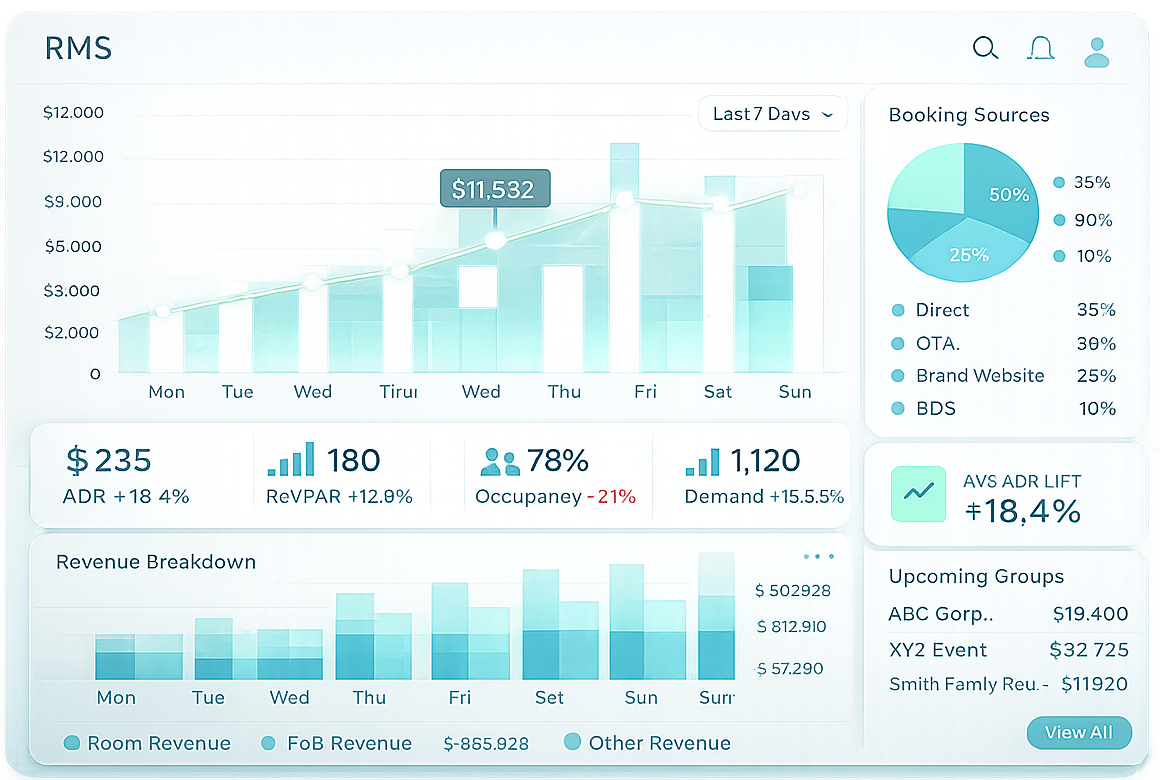
What Is Dynamic Pricing in Hotels?
Dynamic pricing is a revenue management strategy where hotel room prices automatically adjust based on real-time market demand.
Instead of using static prices, dynamic pricing systems continuously update room rates based on signals such as:
Occupancy levels
Booking pace trends
Competitor pricing
Seasonal travel patterns
Local events.
Dynamic pricing allows hotels to maximize revenue during high demand periods while maintaining competitiveness during low demand periods.
How Dynamic Pricing Models Work
Modern hotel pricing engines evaluate multiple demand signals simultaneously. These signals are processed through pricing algorithms that determine the optimal room rate.
Occupancy-Based Pricing
Low (30%)
Healthy (60%)
High (85%)
Competitor-Based Pricing
$180Maintain parity with competitors
$220Increase price slightly
$250Premium positioning possible
How Dynamic Pricing Models Work
Static pricing often leaves revenue opportunities on the table. Dynamic pricing enables hotels to maximize revenue by adapting to real-time market conditions.
Key Demand Signals Used in Dynamic Pricing
Modern revenue management systems evaluate several signals when calculating room prices.
Occupancy Trends
Higher occupancy often justifies higher room rates.
Booking Pace
Accelerating booking pace signals rising demand.
Competitor Pricing
Monitoring competitor pricing helps hotels maintain optimal market positioning.
Market Demand Signals
Events, conferences, and tourism trends influence hotel demand.
Key Demand Signals Used in Dynamic Pricing
Propeter provides an advanced dynamic pricing platform designed specifically for hotels. Key capabilities include:
Intelligent Pricing Engine
Propeter evaluates multiple pricing strategies simultaneously and selects the highest defensible rate.
AI Demand Forecasting
Machine learning models forecast demand spikes and occupancy curves.
Competitor Pricing Intelligence
The platform continuously monitors competitor pricing trends across distribution channels.
Anchor-First Pricing Architecture
Propeter prices a primary room type using full demand intelligence and derives other room rates using structured differentials.
Automated Rate Publication
Automatically pushes rates to PMS and channel manager systems.
Frequently Asked Questions About Dynamic Pricing
Dynamic pricing is a strategy where hotel room rates automatically change based on demand conditions and market signals.
Common pricing signals include occupancy levels, competitor pricing, booking pace, and demand forecasts.
Most modern hotels use dynamic pricing through revenue management systems.
Dynamic pricing is one component of hotel revenue management that focuses specifically on optimizing room prices.
Yes. Dynamic pricing helps hotels maximize revenue during peak demand and maintain occupancy during low demand periods.
Optimize Your Hotel Pricing Strategy
Dynamic pricing is essential for modern hotel revenue management. Propeter combines AI demand forecasting, intelligent pricing engines, and automated rate optimization to help hotels maximize revenue performance.
Enhance customer engagement with our intelligent chatbot solutions. Seamlessly automate conversations and elevate user experiences with cutting-edge AI technology.
Resources
Copyright © 2026 propretor | Powered by Propreter