Accurate demand forecasting is a cornerstone of effective hotel revenue management. By predicting future booking patterns and occupancy levels, hotels can make smarter pricing decisions, allocate inventory strategically, and maximize revenue opportunities.
Without reliable demand forecasts, hotels risk underpricing rooms during high demand periods or overpricing during weaker demand cycles.
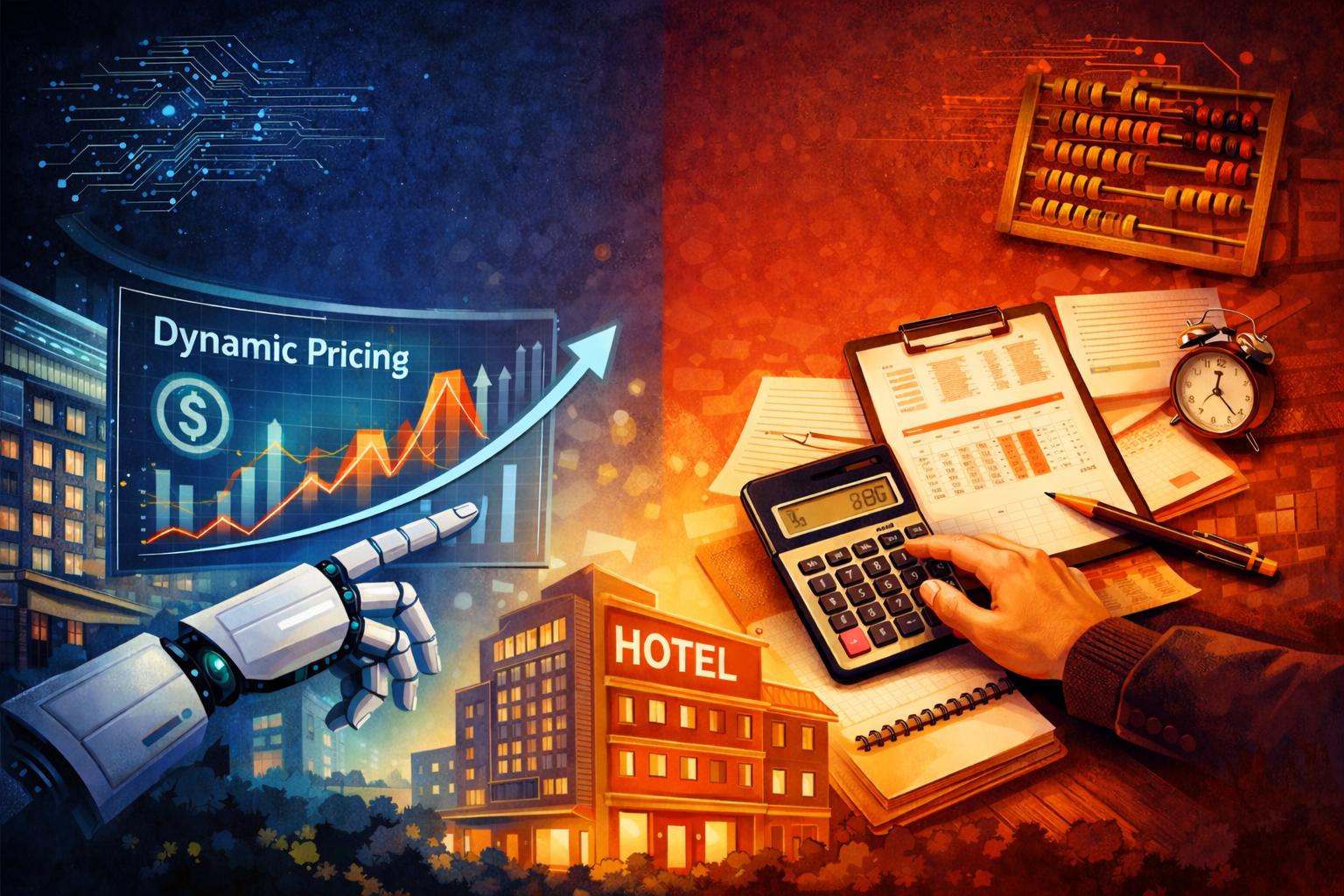
Modern revenue management systems combine historical data, booking pace analysis, and artificial intelligence models to generate highly accurate demand predictions.
To understand how demand forecasting supports pricing decisions, explore our Demand Forecasting Guide.
Historical Forecasting
Historical forecasting is one of the oldest and most widely used demand forecasting methods in hospitality.
This technique relies on analyzing past booking data to predict future demand patterns.
Revenue managers review historical performance metrics such as:
occupancy rates from previous years
seasonal travel patterns
day-of-week booking trends
holiday and event demand patterns.
For example, if a hotel historically reaches 90% occupancy during a particular holiday weekend, revenue managers can anticipate similar demand patterns in future years.
Historical forecasting works well for predictable demand cycles such as:
seasonal tourism patterns
recurring annual events
weekday corporate travel demand.
However, historical forecasting has limitations when unexpected market conditions arise, such as sudden changes in travel demand or new events impacting the market.
Pickup Forecasting
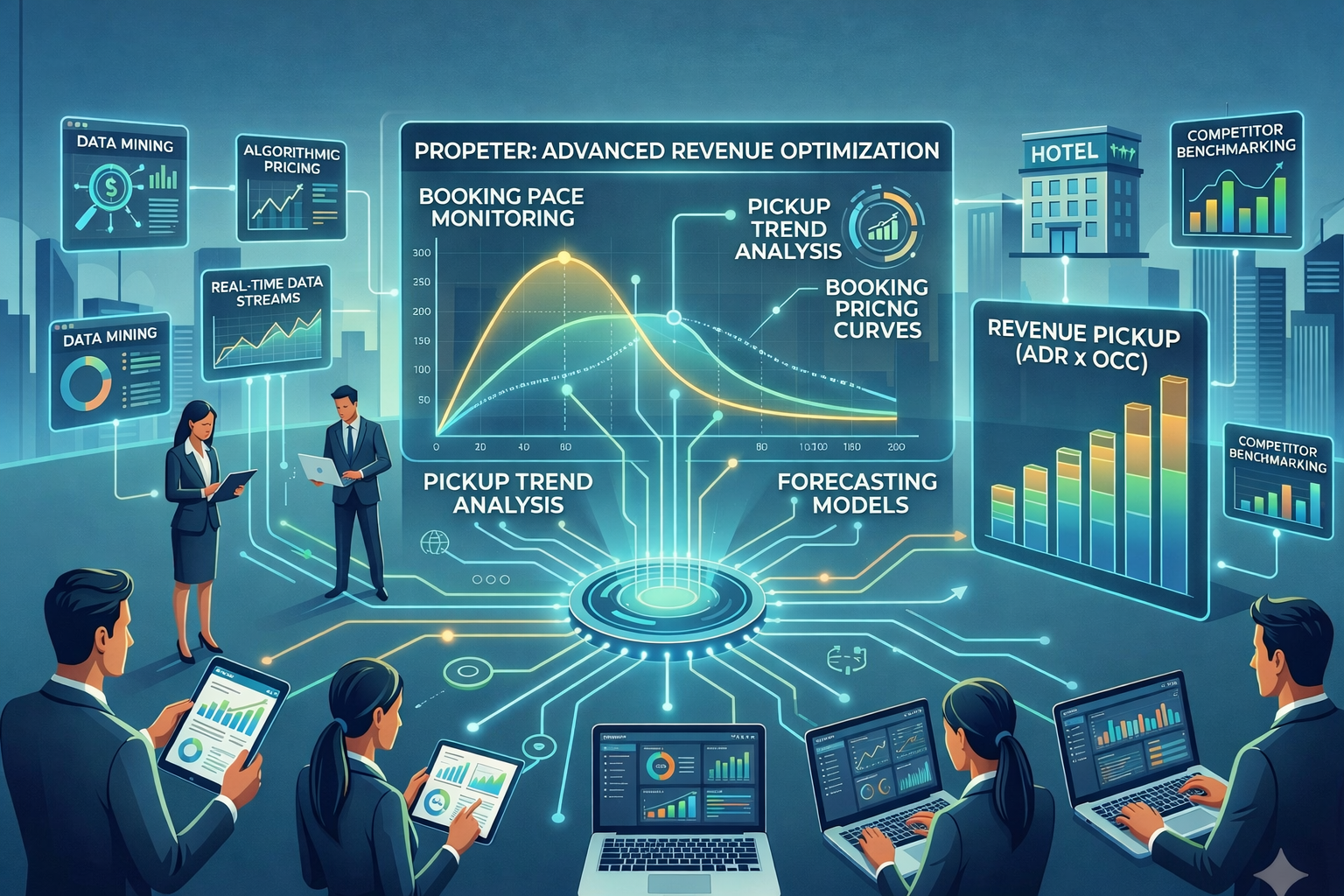
Pickup forecasting focuses on analyzing booking pace, which refers to how quickly reservations accumulate over time for a given arrival date.
Revenue managers track pickup data to understand how current bookings compare with historical booking patterns.
For example:
If a hotel typically reaches 50% occupancy 30 days before arrival but is already at 65% occupancy for the same date this year, demand may be stronger than expected.
Pickup forecasting helps revenue managers answer questions such as:
Are bookings arriving faster than usual?
Are specific dates filling faster than historical trends?
Is demand accelerating closer to arrival?
These insights allow hotels to adjust pricing strategies dynamically.
When booking pace accelerates, hotels may increase prices earlier to capture higher demand.
If bookings are slower than expected, targeted promotions or pricing adjustments may help stimulate demand.
AI Forecasting Models
Artificial intelligence has significantly improved demand forecasting accuracy in hospitality.
AI forecasting models analyze large volumes of data and identify patterns that traditional forecasting methods may overlook.
Machine learning models evaluate multiple demand signals, including:
historical occupancy data
booking pace trends
competitor pricing movements
seasonal demand patterns
market demand indicators
local event data.
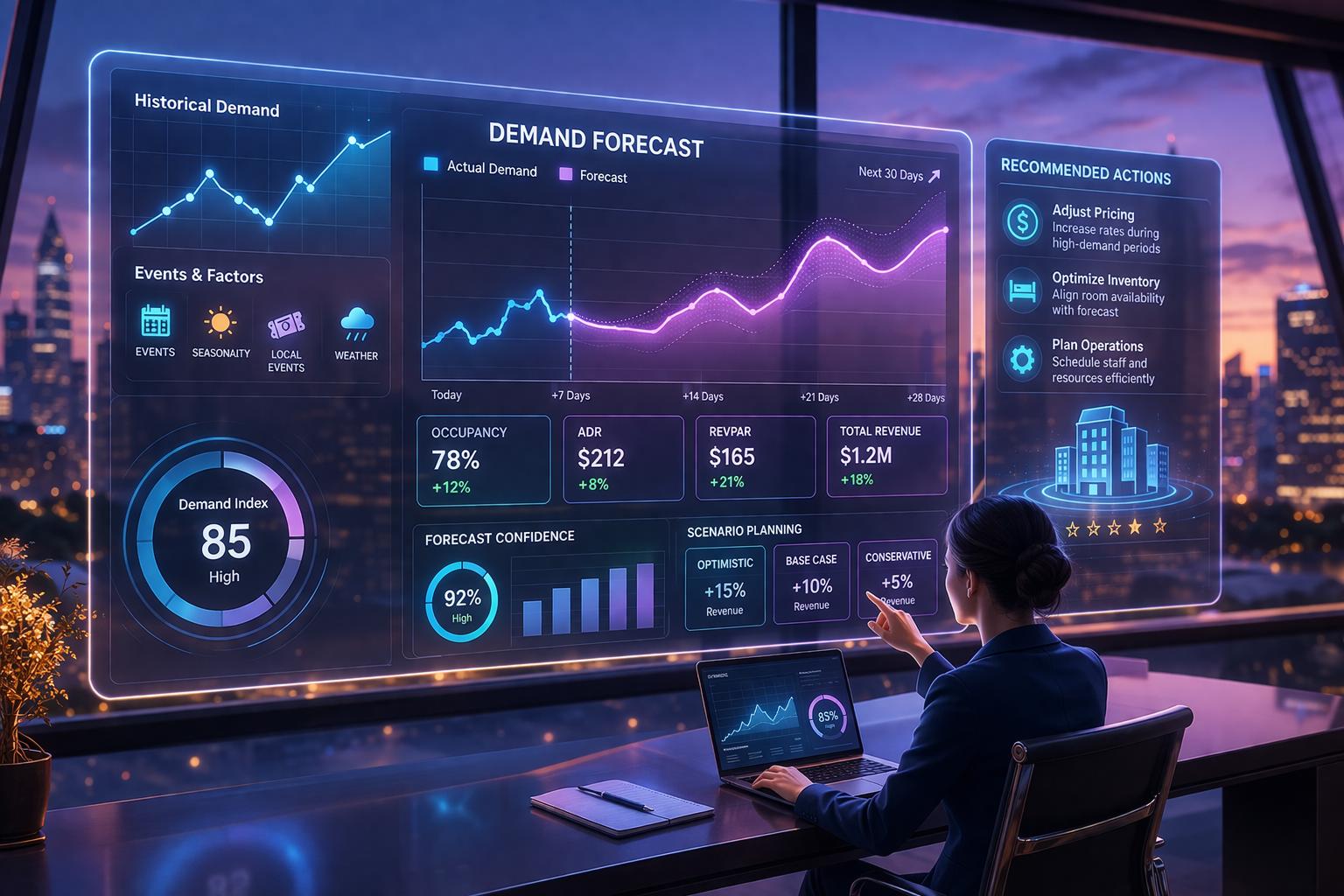
By combining these signals, AI systems generate predictive demand forecasts for each future date.
These models continuously update their predictions as new booking data becomes available, allowing hotels to respond quickly to changing market conditions.
AI forecasting models are particularly useful for detecting:
sudden demand spikes
emerging booking trends
changes in traveler behavior.
When integrated with dynamic pricing systems, AI forecasting models help hotels adjust room rates proactively rather than reactively.
Why Demand Forecasting Matters
Effective demand forecasting enables hotels to:
anticipate future occupancy levels
optimize pricing strategies
allocate inventory across distribution channels
prepare operational resources for expected demand.
Hotels that rely on accurate demand forecasts can capture more revenue during high-demand periods while maintaining competitiveness during slower demand cycles.
Demand forecasting also improves collaboration between revenue management, sales, and marketing teams by providing a clearer view of future demand conditions.
Conclusion
Demand forecasting plays a crucial role in modern hotel revenue management.
By combining historical analysis, booking pace monitoring, and AI-powered predictive models, hotels can generate accurate demand forecasts that support smarter pricing decisions.
Hotels that adopt advanced forecasting techniques gain a competitive advantage by anticipating market trends, adjusting pricing strategies earlier, and maximizing revenue opportunities.
As hospitality markets become increasingly dynamic, demand forecasting will continue to be one of the most important tools for successful revenue optimization.
Discover Intelligent Demand Forecasting
Learn how Propeter’s intelligent pricing engine uses advanced forecasting models and demand signals to optimize hotel pricing automatically.