Demand Forecasting Model Tool
Hotel Demand Forecasting Model Tool
Estimate future hotel demand using simplified forecasting signals used in modern revenue management systems.
Revenue managers can simulate how occupancy trends, booking pace, and demand signals influence future hotel demand.
Forecast Model Formula
Demand Variable Simulation
SIMULATED PROJECTION
78%
Predicted OccupancyWhat Is Hotel Demand Forecasting?
Demand forecasting is the process of predicting future hotel occupancy levels and booking behavior using historical data and market signals.
Accurate demand forecasting allows hotels to:
- Increase prices earlier during rising demand
- Detect compression nights
- Optimize inventory allocation
- Improve revenue performance.
Demand forecasting is one of the core capabilities of modern revenue management systems (RMS).
Demand Signals Used in Forecasting
Modern forecasting models analyze multiple demand signals.
Historical Booking Patterns
Analyzing year-over-year performance data to identify seasonal baselines and recurring demand cycles.
Booking Pace (Pickup)
Tracking the speed at which reservations are coming in compared to the same lead time in previous periods.
Market Demand Indicators
External data such as flight searches, local events, and regional economic stability factors.
Competitor Pricing Behavior
Monitoring the rate parity and pricing movements of primary comp-sets within your local micro-market.
Types of Hotel Forecasting Models
Modern revenue management systems use multiple forecasting approaches.
Historical
Relies on past booking data to identify recurring demand patterns. Simple but may miss real-time market shifts.Pickup
Focuses on booking pace acceleration vs historical curves. Ideal for short-term tactical pricing decisions.Market
Incorporates external signals like tourism demand, airline trends, and competitor pricing behavior.AI / Neural
AI models analyze large datasets including bookings, demand signals, and competitor trends to predict non-linear demand patterns.Forecasting Scenario
Initial Occupancy
Organic Demand Trend
Active Booking Pace
Major Event Factor
Why Demand Forecasting Matters for Pricing
Pricing decisions depend heavily on demand forecasts. If demand is expected to increase, hotels should raise prices earlier.
If demand is weak, hotels may stimulate bookings through promotions. Forecasting enables proactive pricing strategies rather than reactive adjustments.
How Propeter Uses AI for Demand Forecasting
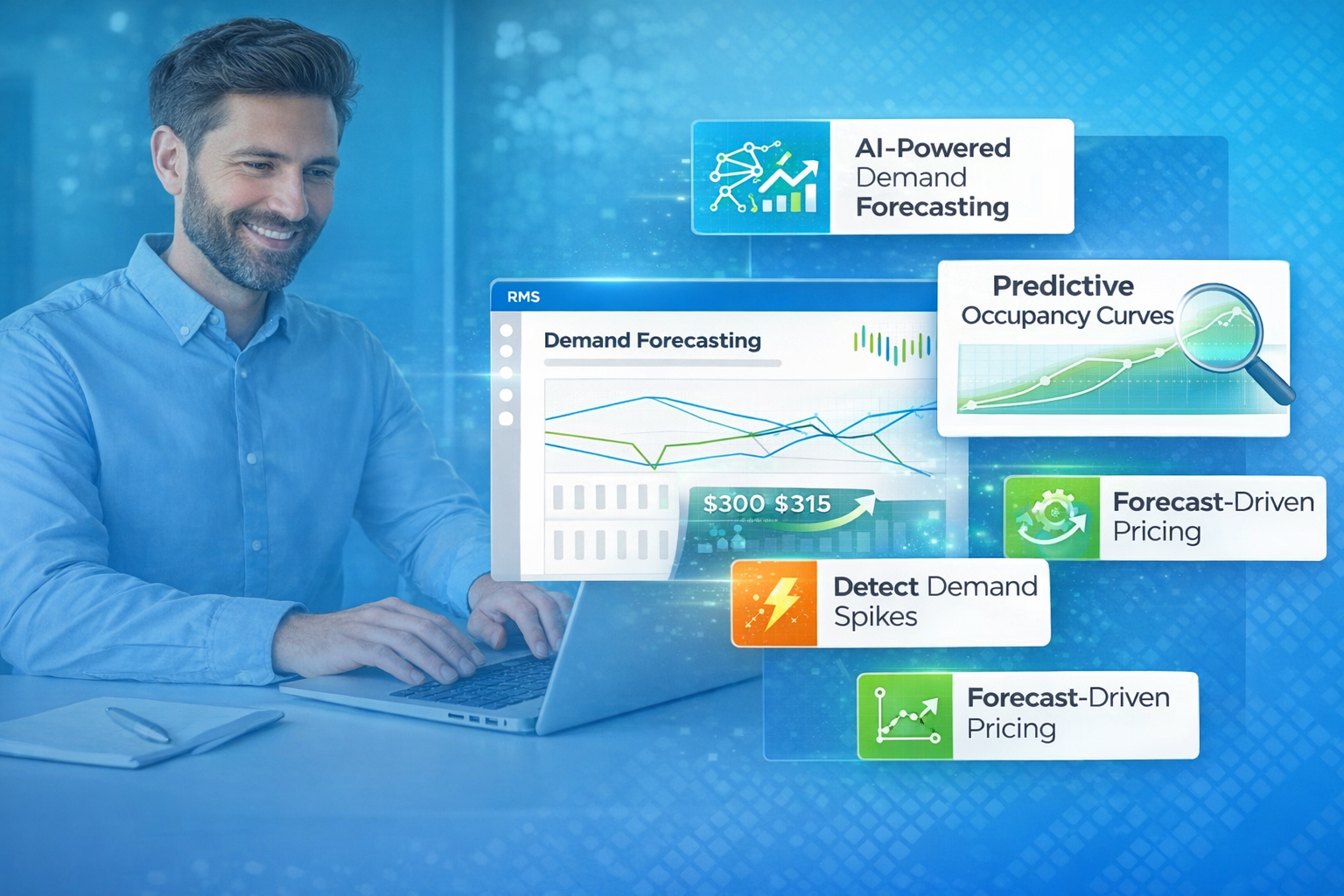
Propeter provides AI-powered demand forecasting designed specifically for hotel revenue optimization. Key forecasting capabilities include:
Predictive Occupancy Curves
Machine learning models forecast occupancy across future booking windows.
Booking Pace Acceleration Detection
The platform identifies changes in pickup velocity.
Demand Spike Prediction
AI models estimate the probability of demand spikes caused by events or market conditions.
Forecast-Driven Pricing
Forecast signals automatically feed into Propeter’s Intelligent Pricing Engine to optimize pricing strategies.
Frequently Asked Questions About ADR
A demand forecasting model predicts future hotel occupancy levels using historical data and market signals.
Forecasting helps hotels anticipate demand changes and adjust pricing strategies accordingly.
Forecasting models typically analyze booking history, booking pace, market demand signals, and competitor pricing.
Machine learning models can analyze larger datasets and often provide more accurate demand predictions.
Predict Future Hotel Demand with AI
Accurate demand forecasting is essential for modern hotel revenue management. Propeter combines AI demand forecasting, intelligent pricing engines, and competitor intelligence to help hotels maximize revenue.
Enhance customer engagement with our intelligent chatbot solutions. Seamlessly automate conversations and elevate user experiences with cutting-edge AI technology.
Resources
Copyright © 2026 propretor | Powered by Propreter