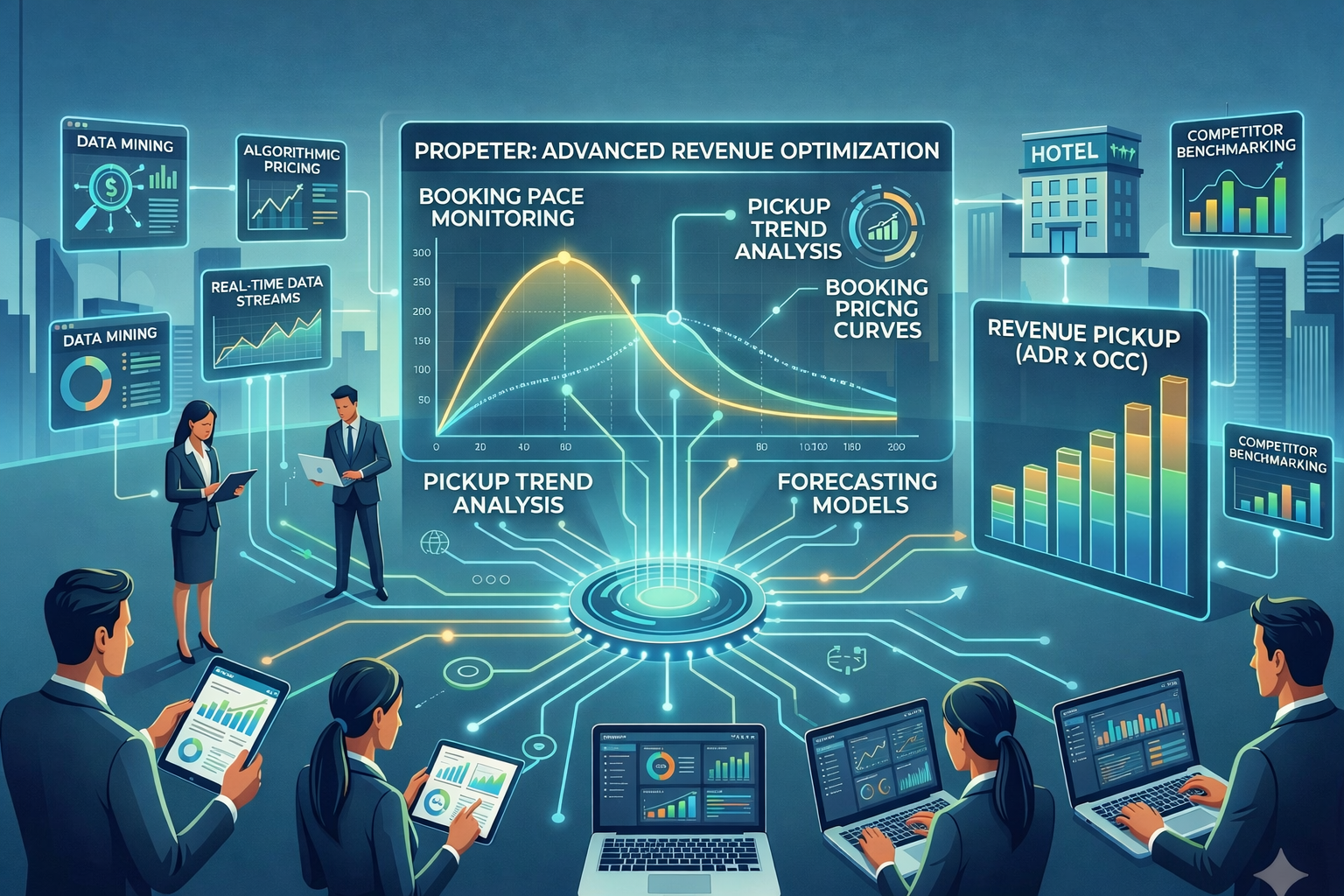

Revenue management in hospitality involves analyzing large volumes of data, interpreting demand trends, and making pricing decisions across hundreds of future dates. As hotels adopt more sophisticated pricing systems, the complexity of revenue management has increased significantly.
To help revenue managers navigate this complexity, many modern revenue platforms are introducing AI revenue copilots—intelligent assistants that analyze data, explain pricing recommendations, and provide actionable insights.
An AI revenue copilot acts as a decision-support companion for revenue managers, helping them understand demand signals, pricing strategies, and market trends more quickly and confidently.
To understand how artificial intelligence powers modern revenue systems, explore our AI Revenue Management Guide.
Explainable Pricing
One of the most important features of AI revenue copilots is explainable pricing.
Traditional revenue management systems often function as black boxes, generating rate recommendations without clearly explaining the reasoning behind them. This lack of transparency can make it difficult for revenue managers to trust automated pricing decisions.
AI revenue copilots address this challenge by providing clear explanations for pricing recommendations.
For example, an AI copilot might explain a pricing recommendation like this:
“Occupancy forecast is trending 10% above historical averages.”
“Competitor average price increased by 8% in the last 48 hours.”
“Booking pace is accelerating compared to the previous week.”
By presenting these insights in a clear and understandable format, AI copilots allow revenue managers to verify pricing recommendations and build confidence in automated revenue strategies.
Automated Insights
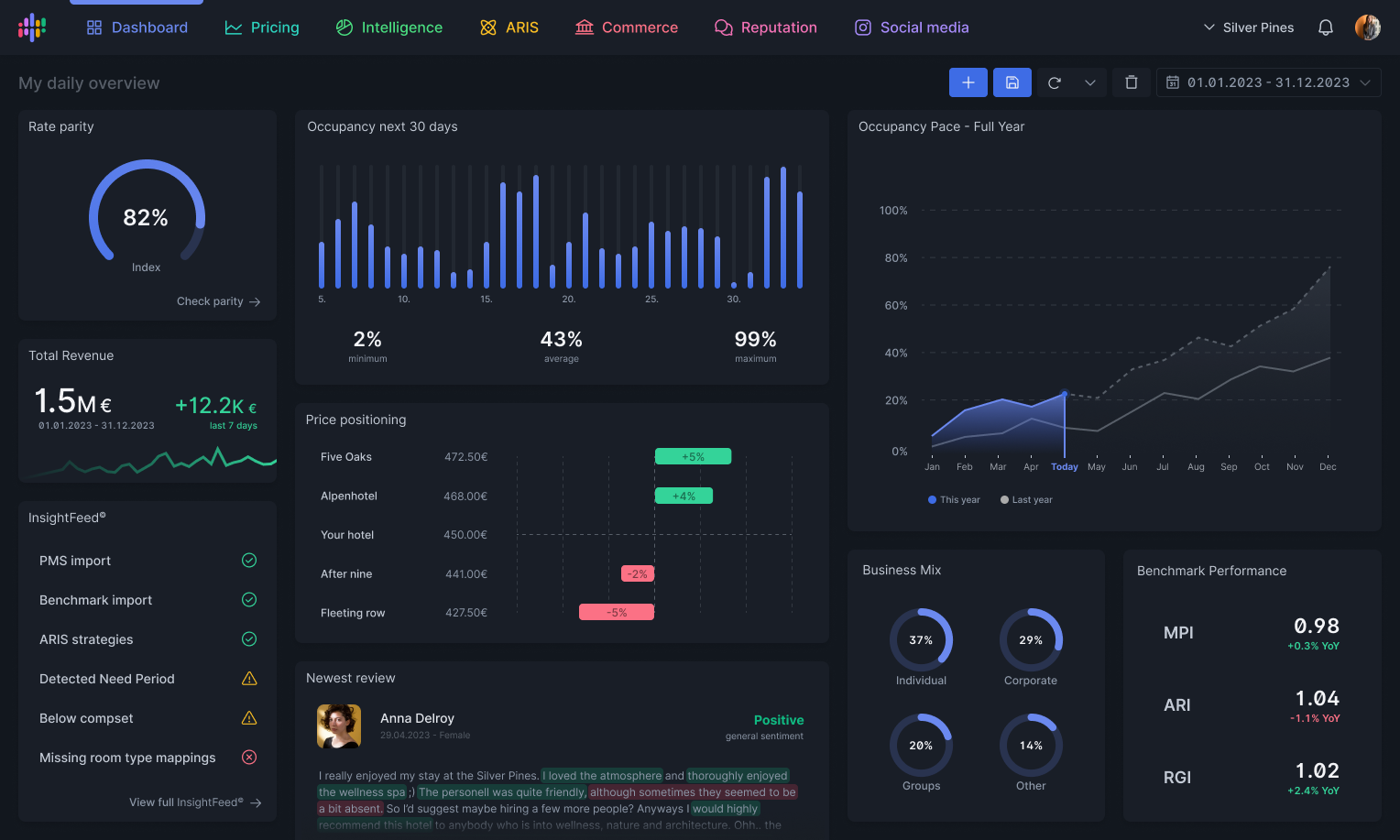
Revenue managers must monitor multiple data streams simultaneously, including booking pace, competitor pricing, occupancy forecasts, and market demand indicators.
AI revenue copilots simplify this process by automatically generating insights based on real-time data analysis.
Instead of manually reviewing dashboards and spreadsheets, revenue managers receive summarized insights such as:
upcoming demand spikes
unexpected booking pace changes
competitor pricing shifts
potential revenue opportunities.
These automated insights help revenue teams quickly identify important trends without spending hours analyzing raw data.
Decision Support Systems
AI revenue copilots function as powerful decision support systems.
Rather than replacing human expertise, these tools enhance decision-making by presenting relevant information and recommendations.
Revenue managers still define pricing strategies, business rules, and market positioning. The AI copilot provides the data analysis needed to support those decisions.
Typical decision support features include:
recommended room rates for future dates
alerts for unusual demand patterns
forecasts of occupancy changes
suggested pricing adjustments.
By providing clear recommendations supported by data, AI copilots help revenue managers make faster and more informed decisions.
AI Strategy Explanations
Another key capability of AI revenue copilots is explaining the strategies behind pricing recommendations.
Revenue management systems often evaluate multiple pricing strategies simultaneously, such as:
demand-based pricing
competitor-based pricing
occupancy-driven pricing
multi-factor pricing models.
AI copilots can explain which strategy was applied and why it produced the recommended rate.
For example, the system may indicate that a particular strategy was selected because:
demand signals were stronger than expected
competitor prices increased
booking pace accelerated for specific dates.
These explanations help revenue managers understand how the system arrived at its recommendations and ensure pricing strategies remain aligned with business objectives.
The Future of AI Revenue Assistants
AI revenue copilots are expected to play an increasingly important role in hospitality revenue management.
Future AI assistants may provide even more advanced capabilities, including:
conversational interfaces for revenue analysis
predictive revenue opportunity alerts
automated strategy recommendations
scenario simulation for pricing decisions.
As AI technology continues to evolve, revenue managers will increasingly rely on AI assistants to help interpret complex data and guide pricing strategies.
Conclusion
AI revenue copilots represent the next step in the evolution of hotel revenue management technology.
By providing explainable pricing insights, automated data analysis, and decision-support tools, these AI assistants empower revenue managers to make faster and more confident pricing decisions.
Rather than replacing human expertise, AI copilots enhance revenue management by combining advanced analytics with clear and actionable insights.
Hotels that adopt AI-powered revenue assistants gain a significant advantage in understanding market conditions, optimizing pricing strategies, and maximizing revenue performance.
See AI Revenue Intelligence in Action
Discover how Propeter’s AI-powered revenue platform helps hotels analyze demand signals, generate pricing insights, and optimize revenue strategies automatically.
➡ Book a Demo