
Demand forecasting has always been a cornerstone of hotel revenue management. The ability to anticipate future occupancy levels allows revenue managers to adjust pricing strategies, optimize inventory allocation, and maximize revenue.
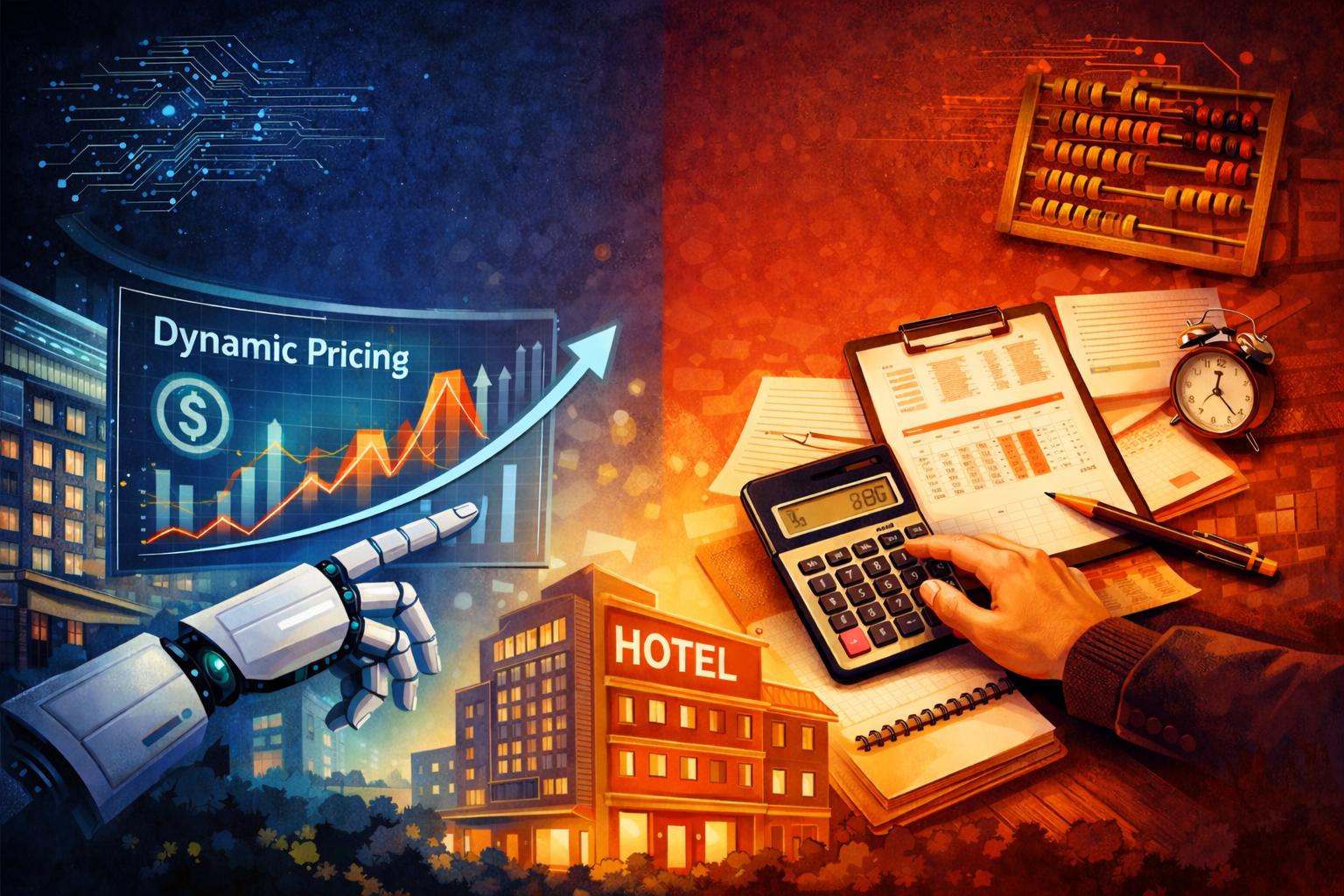
Traditional forecasting methods relied heavily on historical data and manual analysis. While these methods provided useful insights, they often struggled to capture sudden changes in travel demand.
Today, AI-powered forecasting models are transforming how hotels predict demand. By analyzing large volumes of data and detecting patterns in booking behavior, artificial intelligence enables more accurate and dynamic demand predictions.
To understand how artificial intelligence enhances pricing and forecasting strategies, explore our AI Revenue Management Guide.
Predictive Forecasting Models
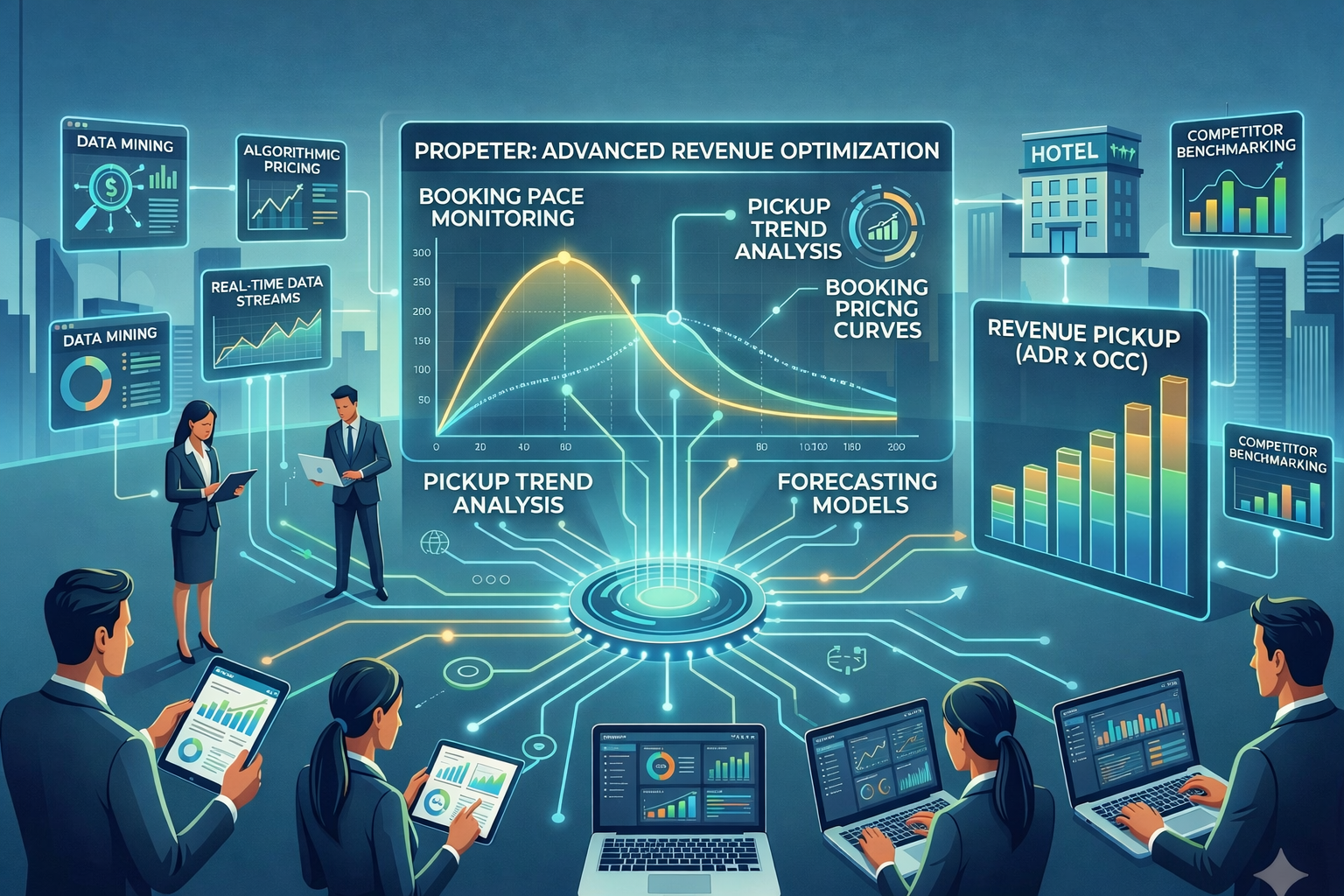
Predictive forecasting models use machine learning algorithms to analyze historical booking patterns and real-time market signals.
Unlike traditional forecasting methods, predictive models continuously learn from new data and refine their predictions over time.
AI forecasting models typically analyze a wide range of variables, including:
historical occupancy trends
seasonal travel patterns
booking pace behavior
competitor pricing movements
market demand signals
local events and conferences.
By combining these signals, predictive models generate demand forecasts that help hotels anticipate future occupancy levels more accurately.
Predictive forecasting allows revenue managers to move from reactive decision-making to proactive revenue optimization.
Occupancy Curve Prediction
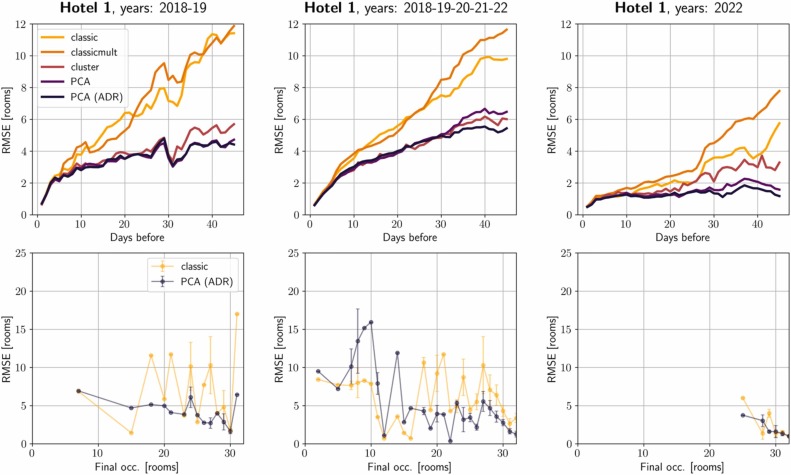
One of the most valuable outputs of AI forecasting models is the occupancy curve.
An occupancy curve represents how occupancy levels are expected to evolve as the arrival date approaches.
For example:
60 days before arrival → 20% occupancy
30 days before arrival → 45% occupancy
14 days before arrival → 65% occupancy
3 days before arrival → 85% occupancy.
By analyzing historical booking patterns and current booking behavior, AI systems can estimate the likely trajectory of occupancy for each date.
This information helps revenue managers determine whether current bookings are ahead of or behind expected demand levels.
If occupancy is rising faster than expected, the system may recommend increasing prices earlier.
If bookings are slower than expected, pricing adjustments or promotional strategies may be required.
Pickup Acceleration Signals
Pickup refers to the number of bookings received over a given period of time.
Pickup acceleration occurs when bookings begin arriving faster than historical patterns suggest.
AI forecasting models monitor pickup signals to detect demand shifts early.
For example, a sudden increase in booking pace may indicate:
rising market demand
upcoming events
competitor inventory shortages
seasonal demand spikes.
By detecting pickup acceleration signals early, revenue management systems can recommend price increases before the market becomes fully saturated.
This allows hotels to capture higher revenue from strong demand conditions.
AI Forecasting Advantages
AI-powered forecasting offers several advantages compared to traditional forecasting methods.
Higher Forecast Accuracy
Machine learning models analyze large volumes of data and identify patterns that may not be visible through manual analysis.
Real-Time Demand Monitoring
AI systems continuously update forecasts as new booking data becomes available.
This ensures revenue managers always have access to the most current demand insights.
Faster Pricing Decisions
When forecasting models detect demand changes, pricing engines can adjust room rates automatically.
This enables hotels to respond quickly to evolving market conditions.
Improved Revenue Optimization
Accurate forecasting allows hotels to implement more effective pricing strategies that maximize both occupancy and revenue.
How AI Forecasting Fits into Revenue Management
AI demand forecasting works best when integrated with automated pricing engines and revenue management platforms.
Modern systems combine forecasting insights with other demand signals such as competitor pricing and booking pace.
These systems continuously analyze demand patterns and generate optimized pricing recommendations for each date and room type.
To understand how forecasting models support broader pricing strategies, explore our Demand Forecasting Guide.
Conclusion
Artificial intelligence is revolutionizing hotel demand forecasting by enabling predictive analytics and real-time market analysis.
AI-powered forecasting models help hotels anticipate demand changes earlier, detect booking trends faster, and adjust pricing strategies more effectively.
Hotels that adopt predictive forecasting technology gain a significant competitive advantage by making more informed pricing decisions and maximizing revenue opportunities.
Discover AI-Powered Demand Forecasting
Learn how Propeter’s AI-powered revenue management platform analyzes demand signals and predicts occupancy trends to optimize hotel pricing automatically.
➡ Book a Demo